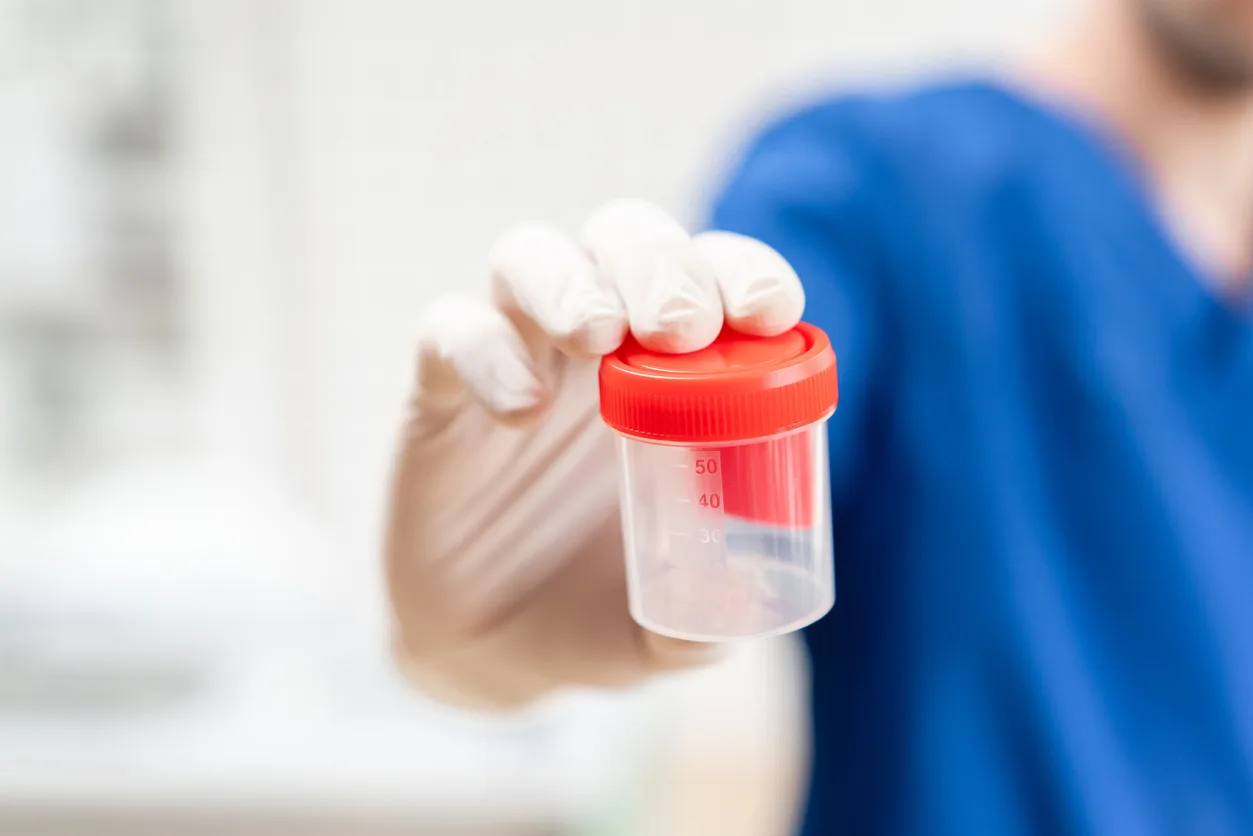
The federal government has proposed changes to workplace drug testing requirements, including reducing certain laboratory quality-control requirements and revising procedures for handling questionable urine specimens.
The Department of Health and Human Services (HHS), through the Substance Abuse and Mental Health Services Administration (SAMHSA), published the proposed revisions in the Federal Register on Thursday, October 29. A separate proposal addresses oral-fluid testing, commonly referred to as saliva testing.
One of the most significant changes would reduce the minimum percentage of quality-control samples required during initial laboratory drug testing from 10% to 4%. The revision would apply to both urine and oral-fluid testing, as well as facilities authorized to perform initial urine screenings.
HHS says the reduction would lower laboratory expenses, including costs associated with materials, equipment verification and reviewing test results. The department maintains that the change would preserve testing quality.
The proposal would retain the existing 10% quality-control requirement for confirmatory testing, which is performed after an initial positive result.
Under the current federal testing standards, urine screenings generally use an initial cutoff of 50 nanograms per milliliter for marijuana metabolites, followed by a confirmatory cutoff of 15 nanograms per milliliter. Oral-fluid testing uses an initial cutoff of 4 nanograms per milliliter for THC and a confirmatory cutoff of 2 nanograms per milliliter. Those thresholds would remain unchanged.
Another proposed change would increase the pH threshold used to identify certain potentially invalid urine specimens from 9.0 to 9.5.
HHS says laboratory evidence indicates that prolonged exposure to elevated temperatures during transportation can naturally raise urine pH above 9.0, particularly during summer months. The department found that specimens reaching pH levels between 9.0 and 9.5 frequently require additional investigation and recollection without necessarily revealing adulteration.
Raising the threshold is expected to reduce unnecessary testing, medical review officer investigations and repeat specimen collections.
The proposals would also expand procedures for examining specimens suspected of substitution. Medical review officers could authorize additional biomarker testing in certain circumstances, while laboratories examining split specimens would be allowed to use different HHS-authorized biomarkers to verify whether a sample had been substituted.
HHS is additionally proposing to end its requirement that authorized federal drug testing panels be republished annually. Instead, the department would publish updated panels in the Federal Register whenever testing substances, biomarkers or cutoff concentrations change.
The accompanying oral-fluid proposal would revise collection procedures, including replacing a fixed 15-minute collection-device time limit with the time limit specified by the manufacturer.
Although federal guidelines authorize oral-fluid drug testing, HHS acknowledges in the new proposal that no laboratories have yet been certified to conduct such testing for federal workplace programs.
The department estimates that federal agencies currently test approximately 275,000 urine specimens annually.
The revised requirements could also affect employees in industries regulated by the Department of Transportation and Nuclear Regulatory Commission, although those agencies would need to determine whether to incorporate the changes into their respective testing programs.
HHS is accepting public comments on both proposals through December 28, 2026. The urine-testing proposal is filed under docket SAMHSA-2026-0002, while the oral-fluid proposal is listed under SAMHSA-2026-0001.



Related posts:
Virginia Finalizes Rules Allowing Hospital Staff to Administer Medical Marijuana Starting December 1...
Maine Regulators Warn Most Intoxicating Hemp Products Face December 11 Federal Ban, Urge Businesses ...