North Carolina’s incoming House Speaker Robert Reives says marijuana decriminalization is a major topic of discussion among Democratic lawmakers, signaling that reform could receive renewed attention when the party takes control of the chamber in January.
“Decriminalization of marijuana has been on top of everybody’s minds,” Reives (D-Chatham) said Tuesday, according to WRAL.
The comments come one week after Democrats won control of the North Carolina House of Representatives for the first time since 2010, securing at least 66 of the chamber’s 120 seats. Reives, the current House Democratic leader, has secured enough support to become the next speaker, placing him in a position to help determine which legislation receives consideration during the 2027 session.
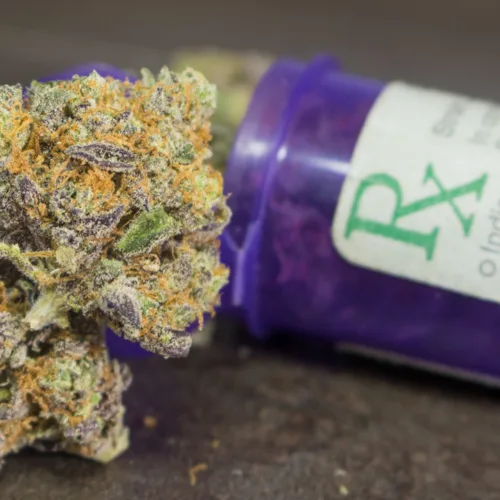
Reives also expressed support for expanding access to medical marijuana, particularly for military veterans. He pointed to his own family’s military service, including his father and uncle, while emphasizing the importance of making additional treatment options available to veterans.
“I want everything we can to help our veterans,” Reives said.
The comments are particularly significant given the Legislature’s history of blocking marijuana reform. North Carolina’s Republican-controlled Senate has repeatedly approved medical marijuana legalization legislation with bipartisan support, including votes of 36 to 10 in both 2023 and 2024. However, Republican leadership in the House declined to advance the proposals.
With Democrats now controlling the House, that longstanding obstacle could be removed. As previously reported by The Marijuana Herald, the election results have substantially improved the prospects for medical marijuana legalization in 2027, while potentially opening the door to broader reforms.
Whether those proposals ultimately advance will depend partly on the outcome of an unresolved state Senate race. Republican Senator Danny Britt currently leads Democratic challenger Catina Hamm by 245 votes, with hundreds of provisional ballots still under review. A Hamm victory would produce a 25-25 Senate, allowing Democratic Lieutenant Governor Rachel Hunt to cast tie-breaking votes. A Britt victory would preserve a narrow Republican majority.
Democratic Governor Josh Stein has also supported broader marijuana legalization. In 2025, he established the North Carolina Advisory Council on Cannabis, which released an interim report in April recommending that the state move toward a regulated recreational marijuana market. The council’s final recommendations are due December 31.
Public support for reform is substantial. An October SurveyUSA poll conducted for WRAL and WSOC found that 74% of North Carolina adults support medical marijuana legalization, while 63% support recreational legalization. The latter figure included 52% of Republicans, 73% of Democrats and 65% of independents.
Under current North Carolina law, possession of half an ounce or less of marijuana remains a Class 3 misdemeanor, generally punishable by a fine rather than incarceration. The state has not established a comprehensive medical marijuana program or legalized recreational sales, although the Eastern Band of Cherokee Indians operates a legal marijuana market on its sovereign tribal land.
Reives has not announced a specific decriminalization proposal or committed to scheduling a vote. However, his comments provide one of the clearest indications yet that marijuana policy will be among the issues considered by the incoming Democratic House majority.