New Report Details the “Top Five Trends in Cannabis”

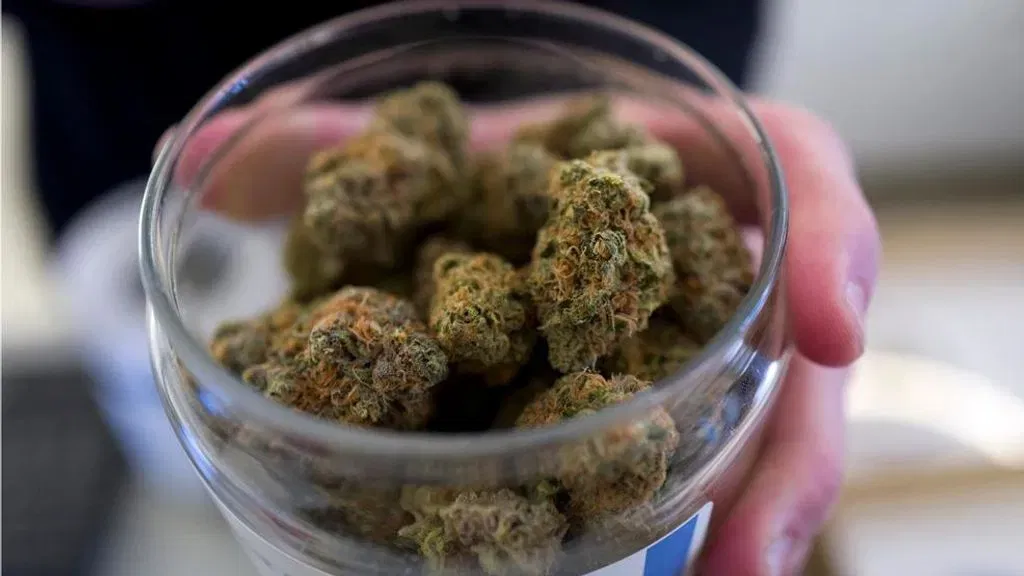
A new global report released by Research and Markets outlines the top five trends currently shaping the legal cannabis industry, highlighting both challenges and opportunities as the market continues to evolve.

According to Top Five Trends in Cannabis, the adult-use sector remains the driving force behind global cannabis growth, influencing both consumer behavior and regulatory momentum. Despite ongoing advances across the medical and CBD sectors, adult-use marijuana continues to generate the most revenue and steer broader legislative efforts.

The report warns that cannabis regulatory developments are likely to remain inconsistent and unpredictable through at least 2027, especially given broader geopolitical and economic uncertainty. Governments may deprioritize legalization, making it harder for companies to forecast and plan.
Continue reading

Maryland Marijuana Sales Pass $97 Million in April, Year-to-Date Total Tops $377 Million

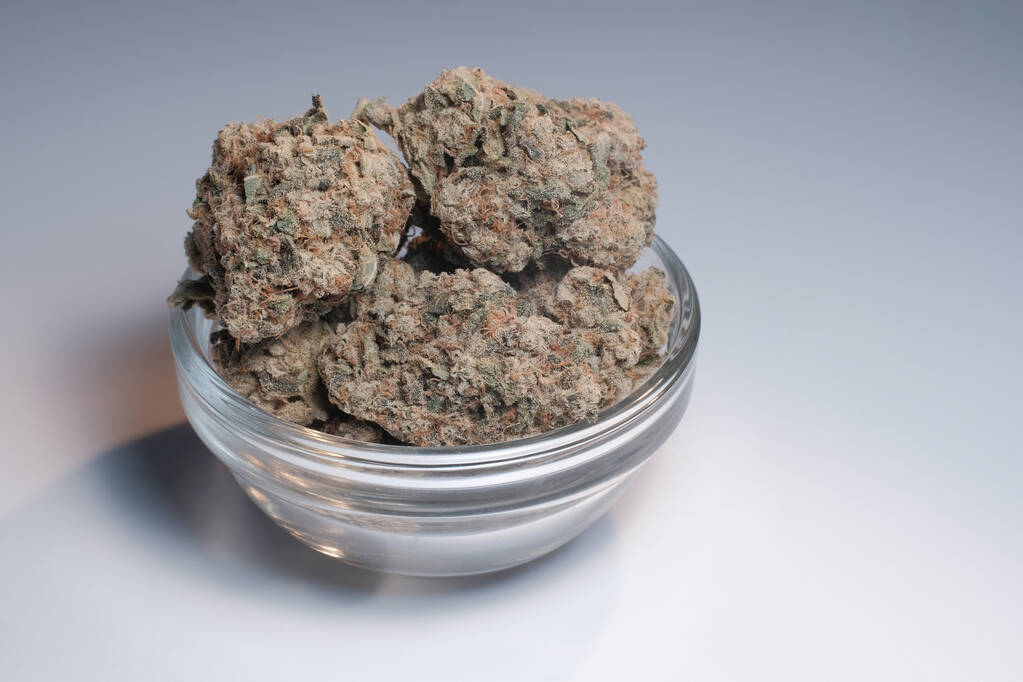
Maryland’s legal marijuana industry generated $97,381,768 in total sales for April 2025, according to new data released by the Maryland Cannabis Administration. That brings the state’s year-to-date total to $377,965,583.

Of the sales in April, approximately $75 million came from adult-use purchases. Flower remained the most popular product category, accounting for $56 million in sales. Concentrates followed with $29 million, while edibles brought in $12 million. The remainder came from other marijuana products such as tinctures and topicals. The average price per gram was $8.50.

Adult-use marijuana sales in Maryland are taxed at 9% by the state, with local jurisdictions able to apply an additional 3% tax. Medical marijuana sales remain tax-exempt. Recreational sales began in July 2023 after voters approved a legalization measure in 2022.
Continue reading

North Carolina Cannabis Superstore, Nation’s Largest Marijuana Outlet, Celebrates 250 Days Open to Everyone 21+

The Great Smoky Cannabis Company in Cherokee, North Carolina is marking a major milestone this week: 250 days of continuous operation since opening its doors to everyone 21 and older on September 7, 2024.

Operated by the Eastern Band of Cherokee Indians (EBCI), the superstore is the only legal marijuana outlet in the state—and it’s not just the only one, it’s the largest in the country. Housed in a former bingo hall that underwent a $50 million renovation, the store spans thousands of square feet and serves tens of thousands of customers each week, with tens of millions of dollars in marijuana sold since its launch.

The success is remarkable not just for its scale, but for taking place in a state where marijuana remains illegal for all uses outside tribal land. Thanks to the EBCI’s sovereign status, the tribe can regulate cannabis on its territory without interference from North Carolina state law. And despite early concerns from critics and law enforcement, there have been zero arrests reported for possession of marijuana legally purchased at the store—underscoring a smooth and controversy-free operation.
Continue reading

Oregon Legislature Approves Psilocybin Bill Protecting Licensed Health Providers, Sending it to Governor Kotek

The Oregon Senate has voted 24 to 5 in favor of legislation that would allow licensed health care providers to discuss and offer psilocybin services without risking disciplinary action.

Dried psilocybin mushrooms (photo credit: Shutterstock).

House Bill 2387, which cleared the House unanimously in a 55 to 0 vote last month, now heads to Governor Tina Kotek for consideration.

If signed into law, or allowed to become law without a signature, the measure would allow licensed physicians, therapists, and other regulated health professionals to provide psilocybin services as long as they also hold a license as a psilocybin service facilitator. The bill explicitly authorizes them to discuss psilocybin therapy with patients and, under certain circumstances, offer it directly.
Continue reading

New York Bill Proposes New Standards for Conditional Marijuana Retail Licenses

New York State Senator Jeremy Cooney (D) introduced legislation today that would establish new eligibility requirements for conditional adult-use marijuana retail dispensary licenses.

New York State Capitol Building.

The measure, Senate Bill 7890, has been referred to the Senate Investigations and Government Operations Committee. Proponents say it’s designed to ensure that licenses are granted to individuals or organizations with strong ties to New York and a record of involvement in communities disproportionately impacted by marijuana prohibition.

To qualify, applicants must meet strict residency and organizational criteria, including a requirement that at least 51% ownership belongs to people who have been personally impacted by past marijuana convictions or are part of qualifying nonprofit organizations.
Continue reading

Former Uruguay President José Mujica, Who Led Nation to Become First-Ever to Legalize Cannabis, Dies at 89

José “Pepe” Mujica, the former president of Uruguay who championed marijuana legalization and led his nation to become the first in the world to officially legalize recreational cannabis, has died at the age of 89.

Mujica served as president from 2010 to 2015, during which time he oversaw a bold and historic shift in drug policy. In 2013, under his leadership, Uruguay passed legislation legalizing the cultivation, distribution, and sale of marijuana. The move made Uruguay the first country to fully legalize recreational cannabis, setting the stage for broader international reform. Canada followed suit five years later, becoming the second nation to legalize in 2018.

The law, which faced both international scrutiny and domestic resistance, was part of Mujica’s broader approach to progressive social policy and criminal justice reform. “We’re not legalizing cannabis because we’re in love with it, but because the prohibition is worse than the drug,” Mujica said at the time, emphasizing a public health-based approach to drug use.
Continue reading

Delaware Committee Approves Bill to Regulate Hemp-Derived THC-Infused Beverages

The Delaware House Economic Development/Banking/Insurance & Commerce Committee has approved a bill to create a regulatory framework for the production and sale of hemp-derived THC-infused beverages.

House Bill 98 was filed on May 7 and cleared committee today, just six days later. The proposal would allow licensed marijuana product manufacturers and licensed alcohol manufacturers to obtain an “infused beverage endorsement” authorizing them to produce beverages containing up to 10 milligrams of THC per container. Out-of-state manufacturers would also be allowed to ship products into Delaware, but only through licensed warehouses.

Retail sales would be limited to licensed package stores, which must apply for authorization to sell the products. These retailers would be required to store infused beverages on separate shelves from non-THC items and post clear signage indicating the presence of THC.
Continue reading

Study: Cannabichromene (CBC) Demonstrates Antidepressant Effects in Animal and Computer Model

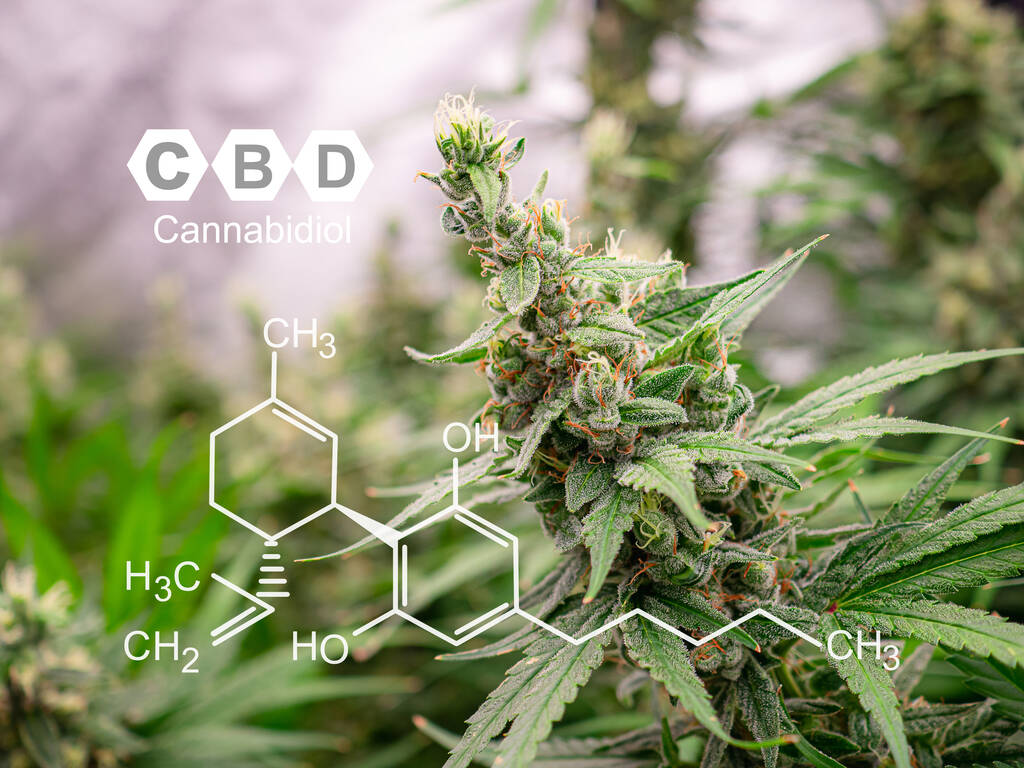
A new study published in Naunyn-Schmiedeberg’s Archives of Pharmacology found that cannabichromene (CBC), a non-psychoactive cannabinoid, may have significant antidepressant effects through its interaction with cannabinoid 2 (CB2) receptors.

The study was conducted by researchers from four Indian institutions, including G D Goenka University and Amity University. Using a combination of computer modeling and animal testing, the team explored CBC’s antidepressant potential. The in silico phase involved identifying gene targets associated with depression and comparing them to those potentially impacted by CBC. CB2 receptor genes were identified as a key shared target, and molecular docking showed CBC binding strongly to these receptors with a higher affinity than cannabidiol (CBD) and THC.

In the in vivo portion, male Swiss albino mice were exposed to three weeks of chronic unpredictable mild stress to induce depression-like symptoms. CBC was administered in two doses (10 and 20 mg/kg), alongside a control group given the standard antidepressant imipramine. Mice treated with 20 mg/kg of CBC showed a significant reduction in immobility—an indicator of depressive behavior—comparable to those treated with imipramine.
Continue reading

Missouri Supreme Court Hears Case on Stacked Marijuana Taxes Impacting Dozens of Cities and Counties

The Missouri Supreme Court is considering whether cities and counties can both impose a 3% sales tax on recreational marijuana, a decision that could affect more than 70 jurisdictions statewide.

The case centers on Robust Missouri 3 LLC, a dispensary in Florissant that says customers are currently paying a combined marijuana sales tax of 6%—3% from the city and 3% from St. Louis County—on top of the state’s 6% marijuana tax, bringing the total to nearly 21%.

The company argues that the Missouri Constitution only allows one local government to impose the additional 3% tax. “There’s only supposed to be one local government, one boss, one master dictating outcomes,” said attorney Eric Walter, representing Robust, during Tuesday’s hearing.
Continue reading

Study: Full-Spectrum CBD With Small Amounts of THC Reduces Alcohol Cravings Without Adverse Effects

A new study published in Frontiers in Psychiatry found that full-spectrum cannabidiol (CBD) containing trace amounts of tetrahydrocannabinol (THC) may reduce alcohol cravings in individuals with moderate to severe alcohol use disorder (AUD), without causing significant side effects.

Researchers from the University of Colorado and Children’s Hospital Colorado conducted a randomized, eight-week trial with 44 participants assigned to receive either full-spectrum CBD (fsCBD, containing less than 0.3% THC), broad-spectrum CBD (bsCBD, with no THC), or a placebo. All products were commercially available and dosed at 150 mg of CBD per day.

The fsCBD group experienced significant reductions in alcohol craving, as measured by the Penn Alcohol Craving Scale, at both week 8 and week 16, while no such improvements were observed in the bsCBD or placebo groups. Those in the fsCBD group also showed a decline in failed attempts to control drinking and a decrease in harmful drinking scores.
Continue reading