Study: CBD Reduces Seizures and Brain Damage in Post-Traumatic Epilepsy Model

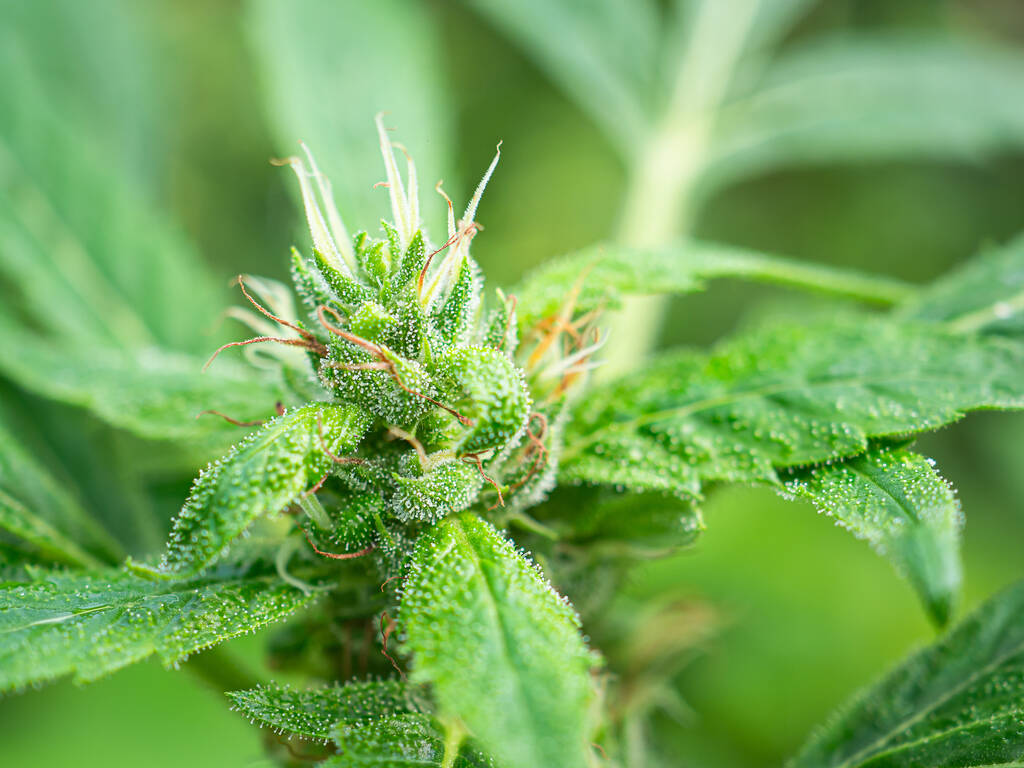
A new study published in the Journal of Ethnopharmacology finds that cannabidiol (CBD) may offer protective and anticonvulsant effects in cases of post-traumatic epilepsy (PTE).

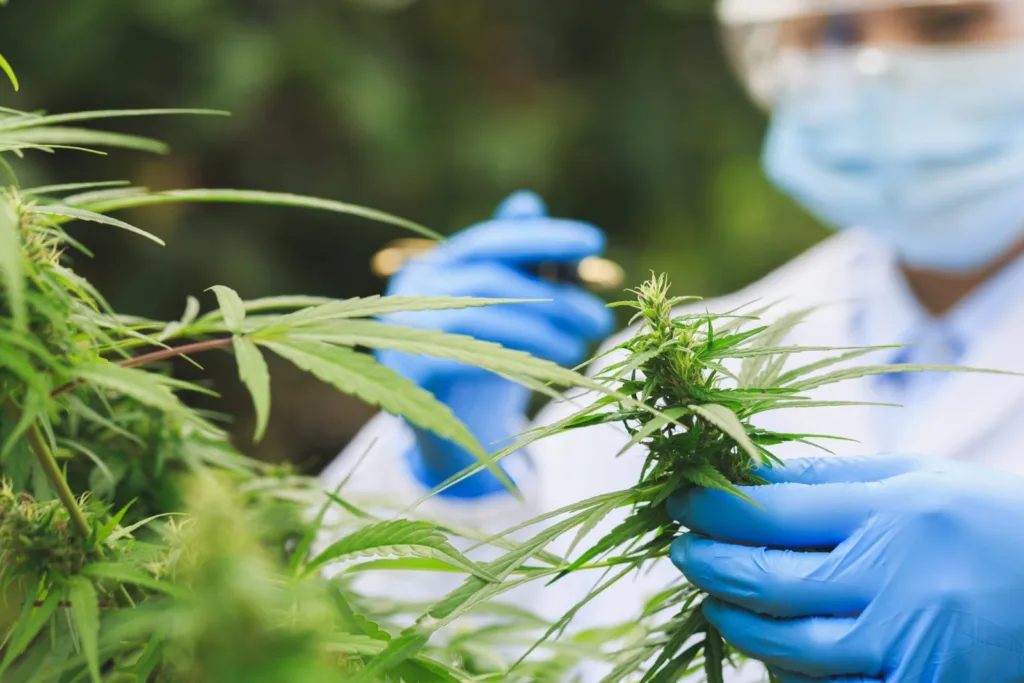
Researchers from Hunan University of Medicine and Ningxia Medical University in China conducted the study using a rat model of PTE triggered by ferric chloride (FeCl₃), including genetically modified rats with overexpressed TRPV1 receptors in the brain. CBD treatment led to a marked decrease in seizure severity and brain tissue damage. EEG monitoring showed that CBD reduced seizure-related electrical activity, including total power and spike-wave discharges.

At the molecular level, the study found that CBD inhibits the TRPV1/HSF1/HSP70 signaling pathway. Specifically, it blocks the phosphorylation of heat shock factor 1 (HSF1) by acting on TRPV1 receptors, which in turn suppresses the stress-induced expression of heat shock protein 70 (HSP70)—a pathway believed to contribute to seizure susceptibility and neuronal stress.
Continue reading

Massachusetts Committee Advances Bipartisan Bill to Overhaul State Cannabis Laws

A comprehensive cannabis reform bill backed by 15 bipartisan lawmakers was officially introduced today in the Massachusetts House of Representatives and has been reported favorably by the Joint Committee on Cannabis Policy.

The bill, House Bill 4160, titled An Act Modernizing the Commonwealth’s Cannabis Laws, has now been referred to the powerful House Ways and Means Committee for further consideration. The legislation is sponsored by lawmakers from both parties and aims to modernize and streamline the state’s marijuana and hemp regulations.

Among the many provisions, the measure would establish a new three-member Massachusetts Cannabis Control Commission, with commissioners appointed by the governor and tasked with overseeing both the marijuana and hemp industries. The bill would also create a Cannabis Advisory Board composed of experts and stakeholders from public health, law enforcement, social justice, agriculture, and industry to provide policy recommendations to the commission.
Continue reading

New York Senate Bill Would Establish New Rules for Marijuana Store Locations and Proximity Waivers

A bill introduced today in the New York Senate would establish stricter regulations around where licensed marijuana stores can operate and how exemptions to proximity restrictions are granted.

New York State Capitol Building.

Filed by State Senator Jeremy Cooney (D), Senate Bill 8278 has been referred to the Committee on Investigations and Government Operations. The legislation would amend Section 85 of New York’s cannabis law to set minimum distance requirements for adult-use marijuana dispensaries while outlining a formal process for proximity protection waiver requests.

Under the bill, licensed adult-use dispensaries would need to be at least 1,000 feet apart in municipalities with populations of 20,000 or more. In smaller jurisdictions, the minimum distance would double to 2,000 feet. The legislation would also give the Cannabis Control Board authority to consider waiver requests but would require a rigorous and transparent process.
Continue reading

Maine Committee Advances Bill to Decriminalize Personal Possession of Psilocybin

The Maine House Criminal Justice and Public Safety Committee has voted to advance legislation that would decriminalize the possession of small amounts of psilocybin, moving the proposal to the full House for consideration.

Dried psilocybin.

House Bill 1034, introduced by a bipartisan group of nine lawmakers from both chambers, would remove criminal penalties for adults 21 and older who possess up to one gram of psilocybin or one ounce of psilocybin-containing mushrooms. The measure does not create a regulated system for distribution or therapeutic access, but instead focuses on eliminating criminal consequences for possessing personal-use quantities.

Supporters of the bill point to a growing body of research suggesting psilocybin may hold mental health benefits, particularly in treating conditions such as depression and PTSD. The legislation reflects a national trend of easing restrictions on psychedelics, with Oregon and Colorado already implementing broader psilocybin reform and several cities across the U.S. adopting decriminalization policies. Some states, like New Mexico, are working to establish medical psilocybin programs.
Continue reading

Ohio Surpasses 10 Million Marijuana Transactions Since Recreational Cannabis Launch in August, Nears $800 Million in Sales

Ohio has surpassed 10 million legal marijuana transactions since the launch of the state’s adult-use market in August, with nearly $800 million in sales.

According to data released by the Division of Cannabis Control, from August 7, 2024—the official start of adult-use marijuana sales—through May 24, 2025, Ohio retailers recorded $788,350,637 in total marijuana sales. This includes $539,950,864 in adult-use sales and $248,399,773 in medical cannabis purchases.

Of the 10,117,705 total transactions, 7,464,591 were from adult-use customers, while 2,653,114 were made by registered medical marijuana patients.
Continue reading

Study: Medical Marijuana Legalization in Oklahoma Drove Sharp Rise in Rural Housing Prices

Oklahoma’s legalization of medical marijuana has contributed to a sharp rise in housing prices, especially in rural areas, according to a new study published in the Journal of Agricultural and Applied Economics.

(Photo credit: Camoin Associates).

The study, led by researchers at Oklahoma State University, found that counties with a high concentration of licensed marijuana grow operations saw housing prices climb by 20% to 25% over a five-year period—far outpacing comparable counties in neighboring states where marijuana remains illegal. In contrast, counties with large numbers of dispensaries but fewer grow operations did not see the same increases.

The findings stem in part from a September 2023 community meeting in Okemah, a small city in Okfuskee County. Residents there raised concerns about rapidly rising property prices, attributing the trend to a flood of out-of-state growers making aggressive real estate purchases following the 2018 vote to legalize medical marijuana.
Continue reading

Germany Imports Record Amount of Medical Cannabis in Early 2025, Most from Canada

Germany brought in a record-setting 41 tons of medical marijuana in the first quarter of 2025, according to new data from the Federal Institute for Drugs and Medical Devices (BfArM).

That figure marks a massive jump from the same period last year, when the country imported under 9 tons—making this year’s total nearly 4.6 times higher.

The majority of the imports, roughly 17.7 tons, came from Canada, a long-standing supplier of medical cannabis to international markets.
Continue reading

US Supreme Court Grants Trump’s DOJ More Time to Consider Marijuana and Gun Rights Appeal

The U.S. Supreme Court has granted the Department of Justice more time to decide whether it will appeal a federal court ruling that questioned the constitutionality of a federal law banning marijuana users from owning firearms.

Last week, Justice Brett Kavanaugh approved a request from Solicitor General D. John Sauer to extend the deadline for filing a potential appeal until June 5. Sauer, who recently assumed the solicitor general role, said in the request that additional time was necessary to consult with other agencies and assess the implications of the lower court’s decision.

The case, U.S. v. Baxter, stems from the arrest of Keshon Daveon Baxter, who was found with both marijuana and a firearm. Federal prosecutors charged Baxter under 18 U.S.C. § 922(g)(3), a statute that prohibits gun ownership by anyone who is an “unlawful user” of a controlled substance.
Continue reading

U.S. States Have Collected Nearly $25 Billion in Marijuana Tax Revenue Since Recreational Sales Began in 2014

Since Colorado and Washington launched the first legal marijuana markets in 2014, states have collectively generated over $24.7 billion in tax revenue from recreational sales, according to a new report by the Marijuana Policy Project. The total surpassed $4.4 billion in 2024 alone — a record high for a single year.

Recreational marijuana is now legal in 24 states, with sales currently active in 21 of them. Among these, seven states brought in more than $200 million in 2024, including California, Washington, and Michigan. Four states exceeded the half-billion mark, with California leading the nation with over $1 billion in annual marijuana tax revenue for the fifth consecutive year.

Since the start of legalization, states have directed these revenues toward a wide range of programs and services, including public education, infrastructure, public health, addiction treatment, housing initiatives, and community reinvestment for areas harmed by past marijuana enforcement. In some states, these funds have outpaced alcohol taxes and made up as much as 1.5% of the entire state budget.
Continue reading

Poll: Majority in Great Britain Support Decriminalizing Cannabis

A new poll shows that a clear majority of adults in Great Britain support decriminalizing the possession of small amounts of marijuana for personal use.

According to the survey, conducted by YouGov and released May 28, 54% of respondents say they support such a policy change. This includes 31% who say they “somewhat support” and 23% who “strongly support” decriminalization. By contrast, just 34% are opposed, with 15% saying they “somewhat oppose” and 19% saying they “strongly oppose.” Another 13% said they’re unsure.

The results are based on responses from 5,306 adults throughout Great Britain. The survey asked: “Would you support or oppose decriminalising possession of small amounts of cannabis for personal use?”
Continue reading