Understanding how long cannabis remains detectable in your system is crucial for some people, especially for those who consume the plant regularly and need to prepare for a drug test.
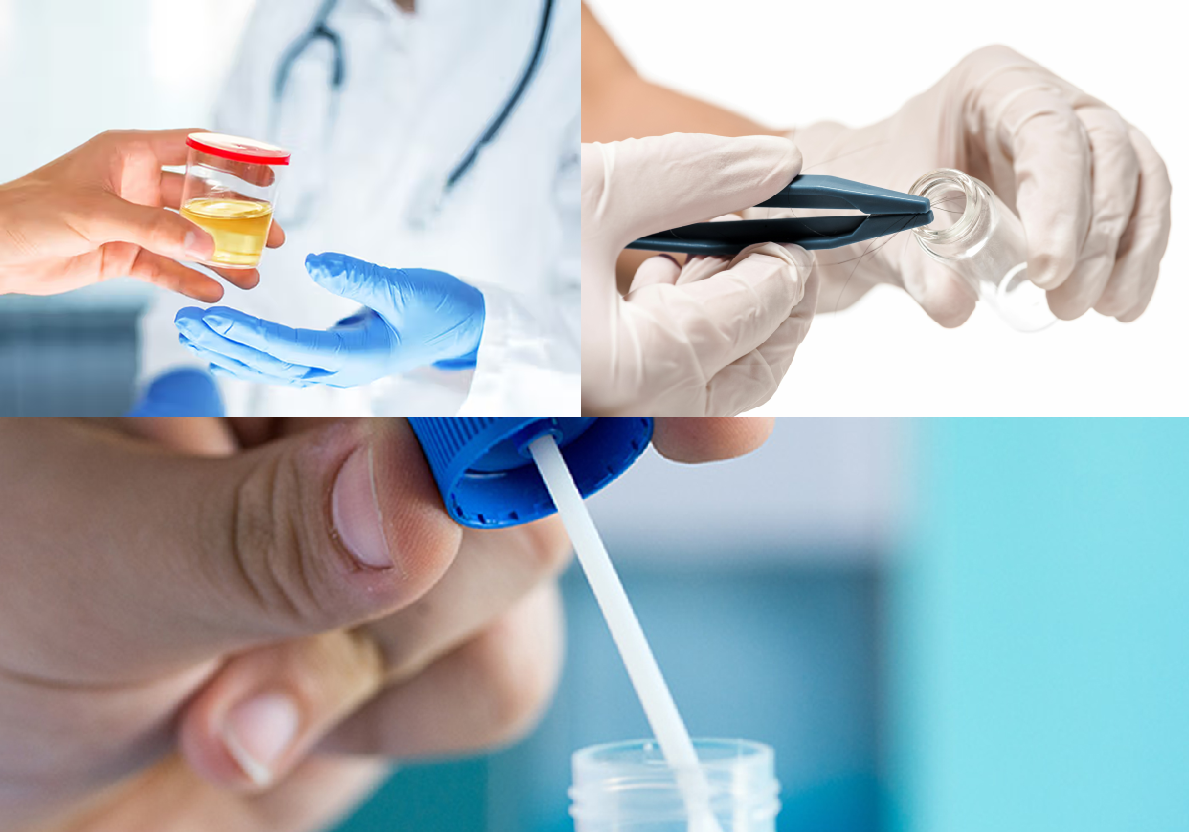
How long marijuana remains detectable in the body depends heavily on the type of test being used, how frequently someone consumes marijuana, the amount of THC consumed and individual differences in how the body processes cannabinoids.
There is no single detection window that applies to everyone.
After occasional marijuana use, THC or its metabolites may be detectable in urine for roughly one to several days, while frequent consumers can continue testing positive for weeks. Blood and saliva tests generally focus more heavily on recent use, although THC can remain detectable much longer in some frequent consumers. Hair testing can potentially identify marijuana exposure over a period of months.
Importantly, how long marijuana can be detected is not the same as how long someone remains impaired. A person can test positive for THC or THC metabolites long after the intoxicating effects have ended.
Here is what research shows about each major type of marijuana test.
Last Updated September 18, 2026.
Marijuana Detection Times at a Glance
| Test | What It Usually Detects | General Detection Window | Important Limitation |
|---|---|---|---|
| Urine | Primarily THC metabolites | Roughly 1–3 days after isolated use at common workplace cutoffs; several days to weeks with frequent use; 30+ days is possible in some chronic users | Cannot establish current impairment or precisely determine when marijuana was consumed |
| Blood | THC and metabolites | Often most useful for detecting recent exposure, but low THC concentrations can persist for days or longer in frequent users | THC concentration does not reliably correspond with impairment |
| Saliva/oral fluid | Primarily THC | Commonly detects relatively recent use, often within hours or days, but much longer detection has been documented in frequent users | Can produce both short-term false negatives and unexpectedly prolonged positives |
| Hair | THC and other cannabinoid markers | Commonly used to examine exposure over roughly the previous 90 days | Poorer at detecting isolated or infrequent use and cannot reliably establish the exact time of consumption |
These are general ranges rather than guarantees. The cutoff used by the laboratory can dramatically change how long a sample remains positive.
Why Marijuana Can Stay Detectable Long After the Effects Wear Off
Delta-9-tetrahydrocannabinol (THC) is the primary intoxicating compound in marijuana.
Once THC enters the body, it is converted into several metabolites. One of the most important for drug testing is 11-nor-9-carboxy-THC (THC-COOH), a nonintoxicating metabolite that can remain in the body considerably longer than THC’s noticeable effects.
THC is also highly fat-soluble. With repeated marijuana consumption, cannabinoids and their metabolites can accumulate in the body and be released gradually over time.
As a result, the same drug test can produce dramatically different detection periods for someone who consumes marijuana once and someone who consumes it multiple times every day.
How Long Does Marijuana Stay in Urine?
Urine testing is one of the most commonly used methods for marijuana drug screening, particularly in workplace testing.
Most urine tests are not looking for active THC itself. Instead, they primarily look for the carboxy metabolite of THC, commonly called THC-COOH.
For federal workplace drug testing, the Substance Abuse and Mental Health Services Administration currently uses an initial urine screening cutoff of 50 nanograms per milliliter, followed by a 15 nanograms per milliliter confirmation cutoff. Private employers and other testing programs can use different standards.
Occasional or One-Time Marijuana Use
Controlled studies show that detection following a single marijuana exposure can be relatively brief when a 50 nanograms per milliliter screening cutoff is used.
In one controlled study involving single smoked marijuana doses, researchers found mean detection periods of less than one day after a lower dose and less than two days after a higher dose when using a 50 nanograms per milliliter immunoassay cutoff.
When more sensitive testing was used, detection lasted longer. Another controlled study found average last-positive urine samples approximately 34 hours after a lower-dose marijuana cigarette and about 89 hours after a higher-dose cigarette at a 15 nanograms per milliliter cutoff.
That means statements such as “marijuana always stays in urine for three days” are too simplistic. Detection depends not only on the person and dose, but also on what concentration the test considers positive.
Frequent and Daily Marijuana Use
Detection becomes much more complicated among frequent consumers.
Researchers with the National Institute on Drug Abuse monitored 60 marijuana consumers under continuous abstinence for as long as 30 days. Participants with higher starting concentrations of THC metabolites generally remained positive substantially longer.
Depending on their initial metabolite concentrations, the average last positive urine result ranged from about four days to more than 15 days. Some participants continued producing positive specimens much longer.
Researchers also found that a person could test negative and later test positive again without consuming additional marijuana. That can happen as residual cannabinoids continue to be eliminated from the body.
Another monitored-abstinence study documented detectable urinary THC in one chronic consumer nearly 25 days after marijuana use stopped.
For heavy and chronic consumers, therefore, a detection period of several weeks is possible, and 30 days should not be viewed as a guaranteed maximum.
How Long Does Marijuana Stay in Blood?
Blood testing differs substantially from urine testing because it can measure active THC as well as its metabolites.
THC concentrations in blood typically rise rapidly after inhaled marijuana use and then fall sharply. That makes blood more useful than urine when investigators are interested in relatively recent exposure.
But blood THC has an important complication: frequent marijuana consumers may retain measurable THC long after acute effects have ended.
In one National Institute on Drug Abuse study involving 25 frequent, long-term marijuana consumers undergoing monitored abstinence, six participants still had detectable THC in whole blood after six full days without marijuana.
Another study involving chronic frequent consumers found measurable plasma THC in some participants after weeks of abstinence. Researchers detected THC in three of five remaining samples on day 30 using a highly sensitive analytical method.
Those findings do not mean that someone remains intoxicated for days or weeks. Instead, they demonstrate why a detectable amount of THC cannot automatically be interpreted as proof of recent consumption or current impairment.
A systematic review examining frequent marijuana consumers found that blood THC concentrations above 2 nanograms per milliliter did not necessarily indicate recent use, with some participants remaining above that concentration after several days of abstinence.
How Long Does Marijuana Stay in Saliva?
Saliva testing, more formally called oral-fluid testing, is increasingly used because collection is relatively simple and the test is generally more focused on recent marijuana exposure than urine testing.
Unlike urine screening, which primarily targets a THC metabolite, oral-fluid testing generally measures THC itself.
Under current federal workplace testing standards, the initial oral-fluid cutoff for THC is 4 nanograms per milliliter, with confirmation at 2 nanograms per milliliter.
For many occasional consumers, the useful detection period is measured in hours rather than weeks.
However, the idea that marijuana disappears from saliva within a fixed 24- or 48-hour period is not supported across all users.
A 2026 systematic review of 16 studies found substantial differences in oral-fluid THC detection between individuals and patterns of use. The review also found that some samples tested negative relatively soon after marijuana consumption, including during a period when impairment could still be present.
At the opposite extreme, frequent consumers can remain positive much longer than expected.
An earlier monitored-abstinence study involving frequent marijuana consumers detected THC in oral fluid for as long as eight days in some participants. Negative specimens were also sometimes followed by positive specimens without new marijuana consumption.
For that reason, saliva testing may be useful for identifying recent marijuana exposure, but it cannot provide a precise clock showing exactly when marijuana was consumed.
How Long Does Marijuana Stay in Hair?
Hair testing provides the longest retrospective window of the major marijuana testing methods.
A common approach analyzes the approximately 3 centimeters of hair closest to the scalp, representing roughly the previous three months of hair growth.
Hair testing therefore may identify a pattern of marijuana exposure extending back approximately 90 days, although it should not be interpreted as an exact calendar of when someone consumed marijuana.
Hair testing also has significant limitations.
Research comparing hair tests with reported marijuana consumption found the method was considerably better at identifying heavy marijuana use than light use. In one study, 77% of heavy consumers tested positive for THC compared with 39% of light consumers.
Researchers concluded that hair analysis could help identify heavy or near-daily marijuana consumption during the preceding three months, but could not reliably identify light use or determine the amount consumed.
Cannabinoid hair testing is also more complicated than simply detecting THC. External contamination from marijuana smoke or direct contact with marijuana can affect some cannabinoid measurements, making laboratory procedures and the specific markers being tested important when interpreting results.
Despite the common phrase “hair follicle test,” laboratories generally test the hair shaft, not the follicle itself.
What Factors Affect How Long THC Remains Detectable?
Several variables can substantially alter marijuana detection times.
Frequency of use is one of the biggest factors. Someone who consumes marijuana every day can accumulate cannabinoids in the body that take considerably longer to eliminate than cannabinoids from a single use.
Dose matters. Higher THC exposure generally produces greater concentrations of THC and its metabolites, which can extend the period during which levels remain above a test’s cutoff.
The sensitivity and cutoff of the test matter. A laboratory capable of detecting extremely small cannabinoid concentrations will naturally have a longer detection window than a test with a higher positivity threshold.
Individual physiology matters. Metabolism, body composition and other biological differences can contribute to variation between people.
Product and method of consumption can matter. Smoking, vaporizing and eating THC produce different absorption and metabolism patterns. However, there is no dependable rule saying an edible will remain detectable for a specific number of days longer than smoked marijuana.
For urine testing in particular, frequency of use, dose and the laboratory cutoff often matter more than trying to calculate an exact detection period based only on whether THC was smoked or eaten.
Do Marijuana Edibles Stay in Your System Longer?
Edibles can produce effects that begin later and last longer than inhaled marijuana because THC is processed differently when it passes through the digestive system and liver.
That does not translate into a simple rule for drug testing.
Controlled research involving oral THC has documented positive urine tests for days after repeated dosing, but detection depends heavily on dose, frequency of exposure and the cutoff used by the test.
Someone who consumes a single low-dose edible and someone who consumes high-dose edibles daily can therefore have entirely different detection periods.
Can CBD Cause a Positive Marijuana Drug Test?
Pure cannabidiol (CBD) generally should not cause a standard urine test to become positive for THC metabolites.
The larger concern is that many hemp-derived CBD products contain some THC.
Controlled research found that pure CBD administration did not produce urine specimens exceeding the federal THC confirmation cutoff. In contrast, CBD-dominant marijuana containing a small amount of THC produced confirmed positive results in some participants.
More recent controlled research has similarly found that repeated use of hemp-derived products containing small quantities of THC can produce positive urine tests, even when the THC dose is too low to produce noticeable intoxication.
Someone subject to drug testing should therefore not assume that a product marketed as CBD or hemp is incapable of producing a positive THC result.
Can Secondhand Marijuana Smoke Make You Fail a Drug Test?
Under ordinary real-world exposure, a positive urine test from secondhand marijuana smoke appears unlikely.
But under extreme conditions, it is possible.
Researchers placed nonconsumers in a sealed chamber with people actively smoking marijuana. Under highly concentrated, unventilated conditions, one nonsmoker produced a positive urine screen at the commonly used 50 nanograms per milliliter cutoff, while additional positives occurred when a more sensitive 20 nanograms per milliliter cutoff was used.
When the room was ventilated, exposure dropped substantially and positive urine screens did not occur.
Researchers concluded that positive tests from secondhand exposure were likely to be rare, short-lived and associated with obvious, unusually intense smoke exposure.
Does a Positive THC Test Mean Someone Is Impaired?
No.
This is one of the most important distinctions in marijuana drug testing.
A urine test primarily establishes that marijuana exposure occurred at some point before the specimen was collected. It does not determine whether someone is currently intoxicated.
Even tests that directly measure THC in blood or oral fluid have limitations when used to estimate impairment.
A meta-analysis examining blood and oral-fluid THC concentrations concluded that cannabinoid concentrations were relatively poor indicators of THC-related impairment, particularly among regular marijuana consumers.
The Substance Abuse and Mental Health Services Administration likewise notes that federal workplace drug-testing results do not themselves determine whether an employee is fit for duty.
This distinction is particularly important because frequent consumers can retain measurable THC or THC metabolites for days or weeks after their last use.
Can Drinking Water, Exercising or “Detoxing” Clear THC Faster?
There is no reliable method that can guarantee THC metabolites will disappear from the body by a particular date.
Drinking water can change how concentrated a urine specimen is, but it does not instantly remove THC metabolites from the body. Drug-testing programs may also evaluate specimens for excessive dilution.
Similarly, products advertised as marijuana “detoxes” should not be confused with actually eliminating stored cannabinoids from the body.
The most dependable factor reducing cannabinoid concentrations is simply time without additional THC exposure.
Because elimination varies so widely between individuals, even people with similar marijuana consumption patterns can test negative on different schedules.
The Bottom Line
There is no scientifically reliable answer to the question of exactly how many days marijuana will remain detectable for a particular person.
After isolated marijuana use, a urine test using common workplace cutoffs may remain positive for roughly one to several days. Frequent consumers may test positive for several weeks, and exceptionally prolonged detection is possible among chronic heavy consumers.
Blood and saliva tests generally provide information about more recent exposure, but studies have documented residual THC well after the period of acute intoxication, particularly among frequent consumers. Hair testing can provide a much longer historical window, commonly extending across approximately three months, but is less reliable for detecting occasional use.
Above all, detection should not be confused with impairment. A positive marijuana test establishes the presence of THC or a cannabinoid metabolite above a particular laboratory threshold. It does not, by itself, establish when marijuana was consumed, how much was consumed or whether the person was impaired when the sample was collected.