According to a study published in the journal Translational Psychiatry, psilocybin reduced key symptoms of depression and anxiety in mice subjected to chronic stress.
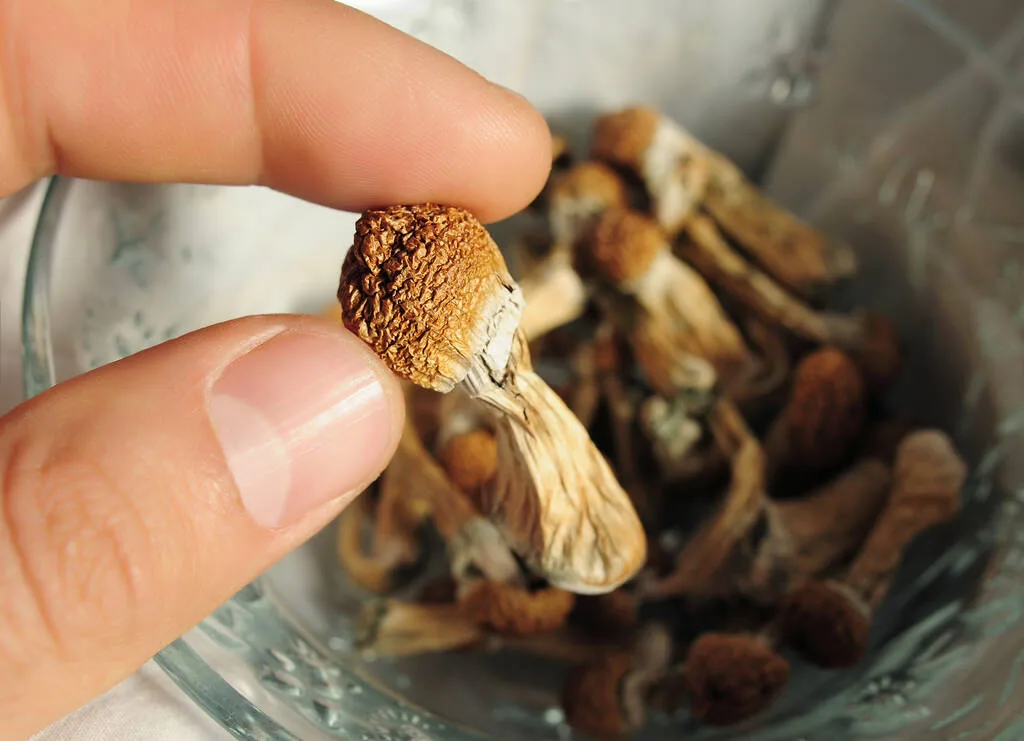
Dried psilocybin mushrooms.
“In the search for novel rapid-acting antidepressants, the psychedelic psilocybin has emerged as a promising therapy in several clinical trials”, states the study’s abstract. “However, its antidepressant mechanism of action is still not well understood.”
With that in mind, the aim of this study “was to evaluate the therapeutic potential of psilocybin in ameliorating the adverse behavioural and neurochemical consequences of chronic stress.”
To this end, a chronic unpredictable mild stress (CUMS) animal model was used, and psilocybin treatment was administered (two doses of 1 mg/kg, i.p., administered 7 days apart).
“Psilocybin reversed impairments in anhedonia and behavioural despair dimensions of depressive phenotype but not in apathy-related behaviour”, claim researchers. “Psilocybin administration was also able to exert an anxiolytic-like effect on treated animals.”
Although psilocybin alleviated several behavioral symptoms, it did not normalize stress-induced physiological changes linked to the hypothalamic-pituitary-adrenal (HPA) axis, nor did it restore reduced levels of brain-derived neurotrophic factor (BDNF) in the cortex. However, it did enhance the expression and function of serotonin 2A receptors (5HT2AR) in the cortex and selectively increased glucocorticoid receptor (GR) expression in stressed animals.
“In conclusion, psilocybin was able to rescue impairments in the depressive phenotype, and to induce anxiolytic-like effects”, states the study. “Furthermore, an enhancement in sensitivity to psilocybin-induced HTR was observed following a booster dose. Altogether, this work provides new knowledge on the putative benefit/risk actions of psilocybin and contributes to the understanding of the therapeutic mechanism of action of psychedelics.”


Related posts:

Oklahoma Recalls Medical Marijuana Flower Over Mold and Yeast Testing Failures, Introduces New Track...
Illinois Seeks Contractor for Multi-Year Statewide Marijuana Media Campaign Focused on Legal Market