Researchers at the University of Parma tested breads made with 10%, 15% and 25% hemp flour (a mix of Felina 32 and Futura 75) and found clear and significant nutritional gains with modest impacts on flavor.
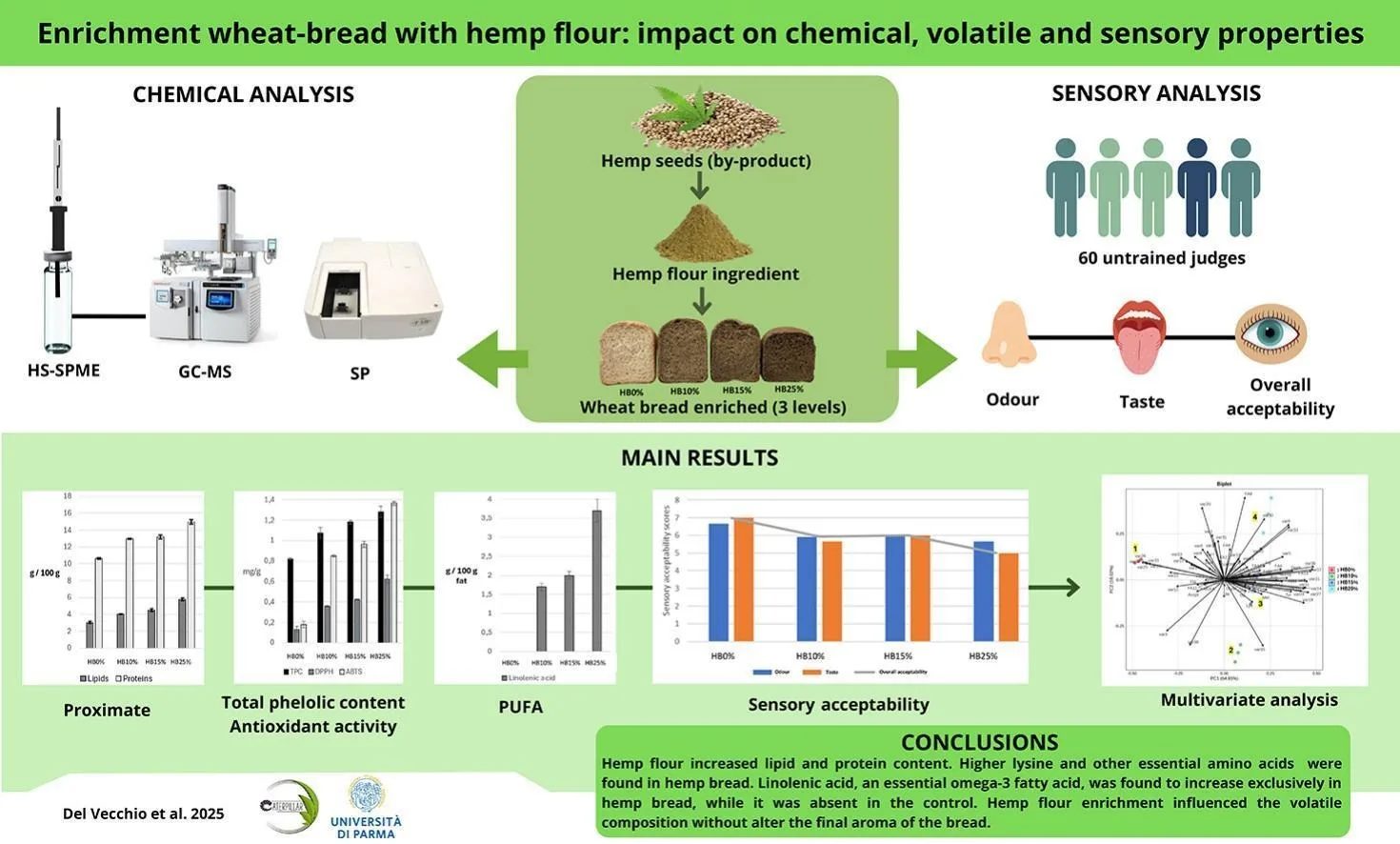
Compared to standard wheat loaves, hemp-fortified breads delivered more protein, more polyunsaturated fats—especially linolenic (omega-3) and linoleic (omega-6) acids—and higher levels of essential amino acids including lysine, leucine and phenylalanine. Total polyphenols and antioxidant capacity rose steadily with higher hemp levels, peaking at 25%. The study was published by the journal Food Research International.
The team mapped aroma compounds and reported increases in hexanoic acid, humulene and citral in hemp loaves, alongside baking-derived notes such as 1-octen-3-ol and related aldehydes. Sensory panels of 60 untrained tasters rated odor similarly across all breads, but noted a slight bitter aftertaste in hemp versions. Even so, overall acceptability stayed above neutral for every formula, with scores highest for the control and holding near the “slightly like” range for 10% and 15%.
Fatty-acid profiling confirmed that hemp additions introduced linolenic acid absent from wheat bread, while amino-acid analysis showed consistent enrichment of essential amino acids at each substitution level. Antioxidant testing with Folin, DPPH and ABTS assays showed a dose-response, with 25% hemp flour yielding the strongest readings. A principal-components analysis separated the breads cleanly by inclusion rate, driven by rises in antioxidants, key amino acids and terpene-linked volatiles in the hemp groups.
The study’s data suggest a practical sweet spot at 10–15% substitution, where protein, essential fatty acids and antioxidant measures improve while consumer acceptance remains steady. At 25%, nutrition climbs further but taste scores slip due to bitterness.
“We can conclude that HF is a valuable ingredient, to improve the nutritional properties of bread”, concludes the study. “However, the inclusion level is pivotal to balance nutritional improvement and sensory effects. Our work allowed to identify 10 and 15 % as the optimal inclusion levels. Further studies may explore the bioavailability of phenolic compounds after in-vitro digestion. Sensory analysis with a larger number of consumers and descriptive sensory tests may be helpful to release more robust feedback on hemp flour- bread acceptability and overall sensory profile.”