(Photo credit: GETTY Images).
By Dallion McGregor, Founder of LeafSuite
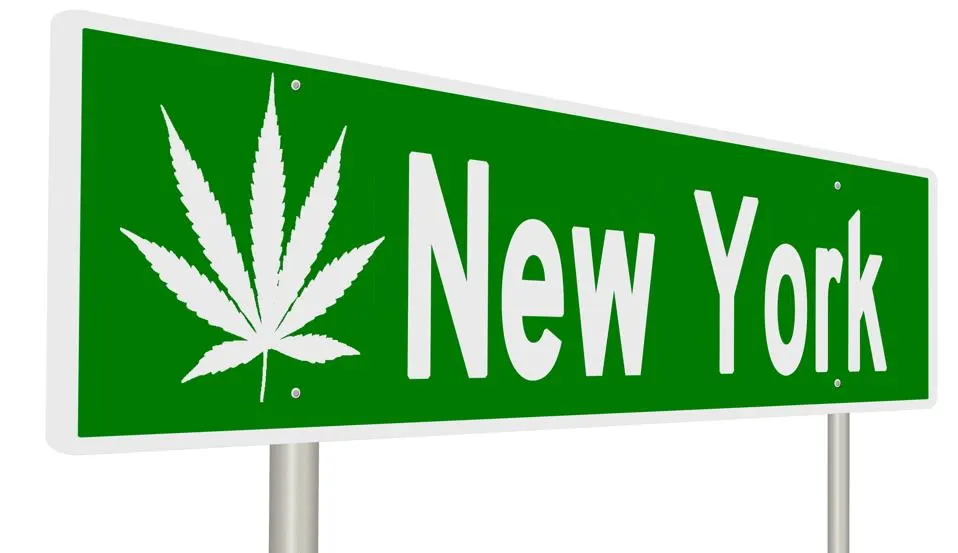
On February 24, your billboard came down.
Not because it stopped working. Because the Office of Cannabis Management told you to take it down.
And here’s the part nobody wants to say out loud: there is no paid channel waiting to catch that money. Google won’t run your ads. Meta won’t run your ads. The billboard company that just lost your contract can’t sell you anything else that reaches the same person.
So the budget is sitting there. Most operators I talk to are treating this as a compliance problem — get the vinyl down, avoid the fine, move on.
It’s not a compliance problem. It’s a budget-allocation problem. And most of you are about to spend that money on Weedmaps.
That’s the wrong answer.
The channel didn’t get replaced. It got redistributed.
Your billboard did one job: it made someone who wasn’t thinking about your store aware that your store exists.
In cannabis, that awareness almost never converts on the spot. It converts three days later, at 8 p.m., when that person opens their phone and types “dispensary near me.” The billboard was the setup. Search was always the close.
The ban didn’t remove the close. It removed the setup — and the setup was the expensive half.
Which means the money doesn’t need a new awareness channel. It needs to go further down the same path, into the places where the decision actually gets made. Three of them, in this order.
First: the map pack, because it’s the fastest thing you control
When someone searches “dispensary near me,” Google shows three businesses in a box above everything else. Getting into that box is worth more than any billboard on I-87 ever was, and unlike the billboard, it doesn’t have a monthly rate.
Three things decide who’s in it: proximity, relevance, and prominence. You can’t change proximity — your lease is your lease. The other two are entirely yours.
Relevance is how completely your Google Business Profile describes what you actually are. Not just “Cannabis Store” and your hours. Every applicable secondary category. Every attribute. The full services catalog, populated. Most dispensary profiles I audit are 40 percent filled in, which means Google is guessing at the rest.
One warning specific to us: Google blocks Business Profile posts entirely for cannabis retail. If an agency is pitching you weekly GBP posts, they’ve never actually run a dispensary listing and you should end the call there.
Prominence is reviews and citations. Not just the star average — the velocity, and how fast you reply. Set an internal rule that every review gets a response within 36 hours, including the one-stars, especially the one-stars. Then build a repeatable ask into checkout so new reviews arrive every week instead of in a panicked burst when the rating dips.
This works and it works fast. We run this for an independent operator in New Jersey — a market with the same crowding problem New York is growing into — and over 13 months their average map rank went from 7.2 to 3.7, their #1-ranked keywords went from 15 to 41, and their search impressions rose 375 percent while clicks doubled from 3.5K to 7.56K.
No billboard. No paid ads. That market doesn’t allow them either.
Second: the thing New York just made legal
In December 2025, OCM’s updated packaging, labeling, marketing and advertising rules took effect. Buried in the coverage about signage limits was the change that actually matters more: rewards and loyalty programs are now authorized in New York.
Until then, you couldn’t run a points system. You couldn’t bundle. You couldn’t offer a first-time-customer deal. That’s why so many New York dispensaries have a POS full of transaction history and no way to talk to anyone in it.
That restriction is gone. Which means every operator in the state got the same new tool on the same day — and the ones who build it first keep the customers everyone else is still trying to buy back.
Here’s the actual sequence, and it isn’t complicated:
- Capture opt-ins at the register. Every transaction, every time, asked by a trained budtender rather than a sign nobody reads. This is the entire game and it’s the step most stores half-do.
- Send a welcome message within 24 hours of that first opt-in, while they still remember your name.
- Set a win-back trigger at whatever your normal repeat window is — for most stores it’s 30 to 45 days — so lapsing customers get reached before they’re gone rather than after.
- Then layer points and birthdays on top.
One compliance note worth knowing before you build any of it: New York still prohibits discounting cannabis below roughly 1.5 times wholesale cost, and retail tax is calculated on the pre-discount price. So a loyalty program built on aggressive percentage-off promos will run you into both a margin wall and a tax bill you didn’t model. Build it on access, early drops, and recognition instead of price. Better business anyway.
For a client of ours in California, this rebuild produced more than $11K a month in attributed retention revenue and grew their opted-in list past 4,000 — 2.3 times what it was two years earlier. Same list. Nothing bought.
Third: the asset you actually own
Your menu platform owns your menu. Weedmaps owns its audience. Both are fine tools and neither one is yours.
Whatever’s left of the billboard budget goes into the website and the customer data underneath it — an indexable site with real location pages, a menu integration Google can actually crawl, and analytics that tell you which channel produced which sale.
The test is simple. If a platform contract ended tomorrow, what would you still have? Whatever survives that question is the only marketing asset you own. Everything else is rent.
What this means for your budget, plainly
New York did $1.69 billion in adult-use retail sales in 2025, with roughly 582 stores open by early this year and more approved every month. Sales are growing. Your share of them is not automatic.
The operators who struggle over the next two years won’t be the ones who lost a billboard. They’ll be the ones who moved that money sideways into another rented audience and called it a plan.
Fix the listing this month — it’s cheap, it’s fast, and it compounds. Build the retention infrastructure this quarter, while it’s still new enough to be an advantage. Put the rest into the site and the data.
That’s the whole reallocation. It’s less exciting than a billboard on the Thruway.
It also still exists in February.
Dallion McGregor is the founder of LeafSuite, a cannabis marketing agency for New York dispensaries, working with independent operators on local search, retention, and owned-channel growth.