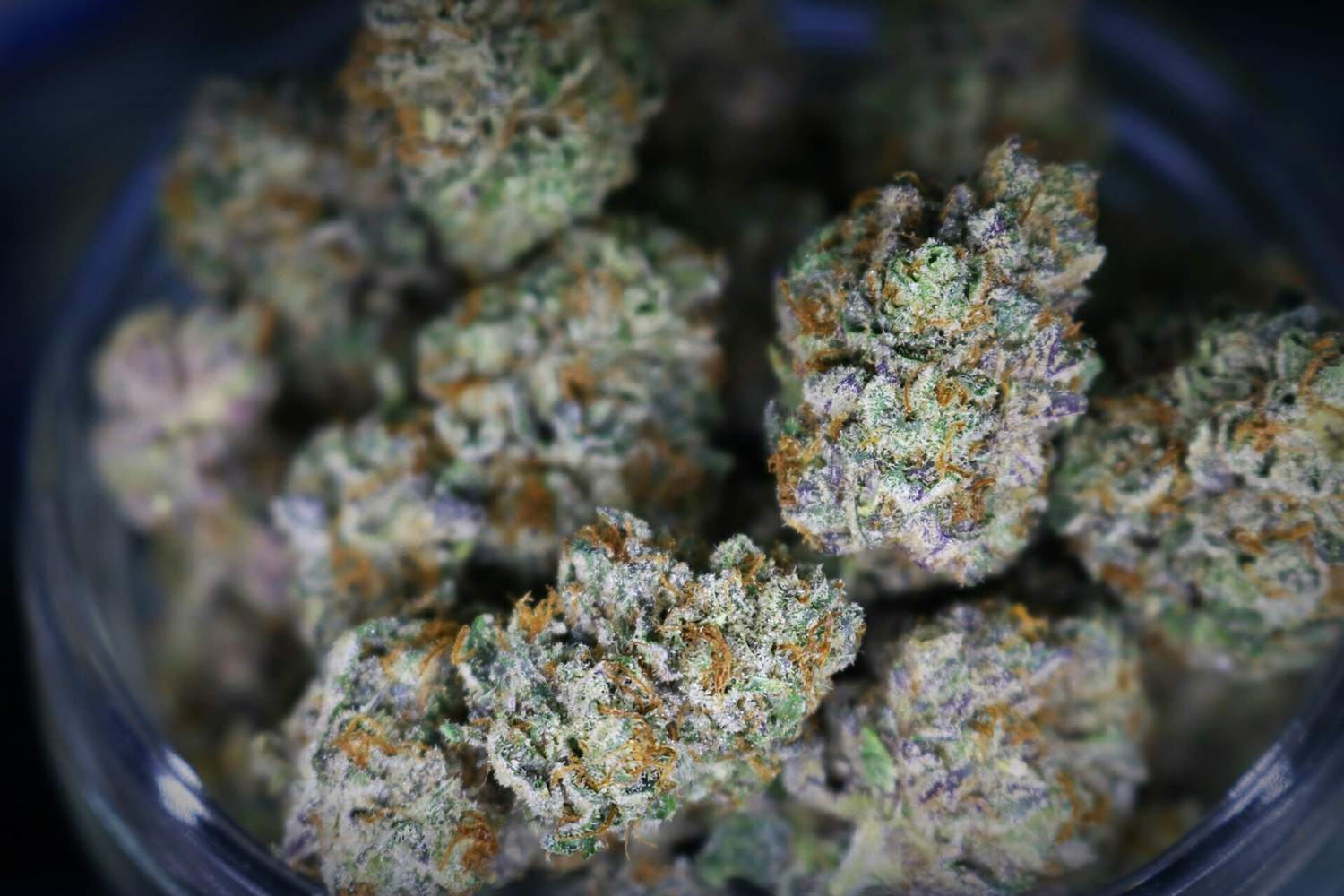
Cannabis buds treated with sodium bicarbonate removed 96% to 100% of lead and copper from contaminated wastewater samples in laboratory tests, according to a study published today in the journal Water, Air, & Soil Pollution.
The research, conducted by scientists at the University of KwaZulu-Natal and the KwaZulu-Natal Department of Agriculture and Rural Development in South Africa, found that cannabis flower could serve as an inexpensive, environmentally friendly material for removing potentially harmful metals from wastewater.
Researchers evaluated three forms of cannabis buds: untreated flower, flower modified with glycine, and flower modified with sodium bicarbonate, commonly known as baking soda. The materials were ground into powder and tested for their ability to absorb lead and copper ions from contaminated water.
The team tested the materials under different temperatures, acidity levels, concentrations and exposure times to determine the most effective conditions. They found that just 10 milligrams of cannabis-based material could effectively treat 10 milliliters of contaminated water within 10 minutes under optimized laboratory conditions.
When tested using wastewater samples, sodium bicarbonate-treated cannabis achieved removal rates of 96% to 100%, compared to 80% to 100% for glycine-treated cannabis and 74% to 88% for untreated cannabis.
Further analysis showed that sodium bicarbonate treatment created a more porous surface, providing additional sites for metal particles to attach. The modified cannabis also demonstrated a greater capacity to capture contaminants, absorbing up to 56.875 milligrams of lead and 31.222 milligrams of copper per gram of material.
The researchers examined wastewater samples from three treatment facilities in South Africa, including the Northern, Umhlathuzana and Umbilo plants. The experiments included samples with added concentrations of lead and copper, allowing the team to measure how effectively the cannabis materials removed both contaminants.
Another significant finding involved reusability. Researchers found that the cannabis-based materials could be regenerated and reused for at least three treatment cycles. Both chemically modified versions maintained removal efficiencies above 80% after three cycles, while the untreated material fell below that threshold.
The researchers noted that conventional wastewater treatment methods, including reverse osmosis and chemical precipitation, can be expensive or generate additional waste. Plant-based materials offer a potentially cheaper alternative, particularly when they can be reused.
Previous studies have examined hemp seeds and fibers for removing heavy metals from water, but the researchers say their work is among the first to evaluate cannabis buds specifically for the simultaneous removal of lead and copper, including the effects of glycine and sodium bicarbonate treatment.
The study was funded by South Africa’s National Research Foundation.