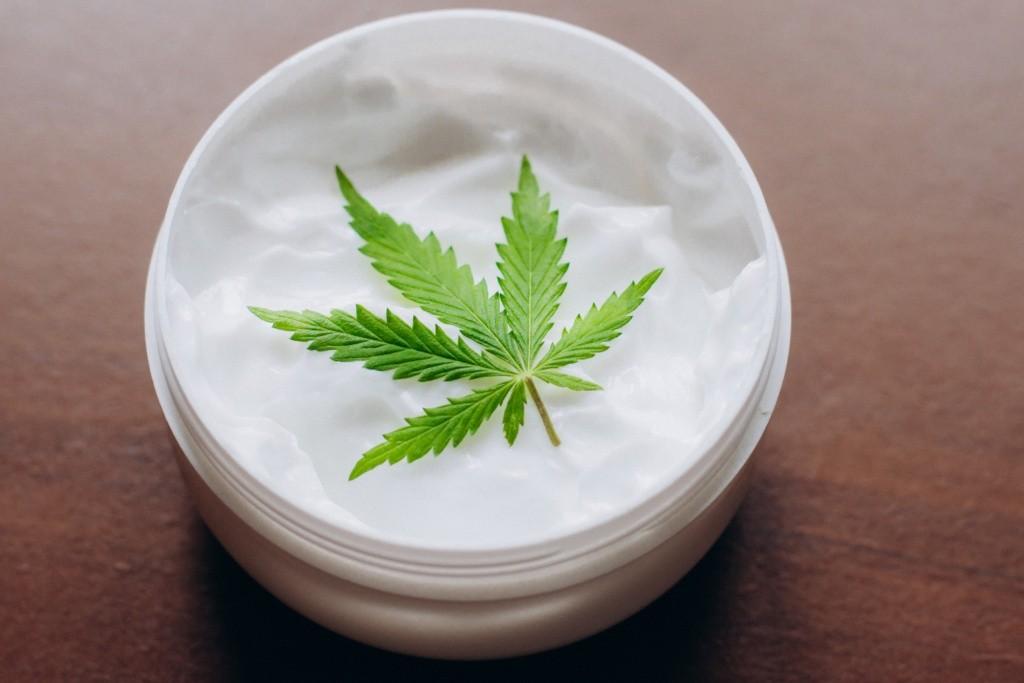
A study published this week in the journal Cosmetics found that a topical cream containing cannabis and turmeric extracts was associated with reduced symptoms of eczema and psoriasis, while laboratory testing found antioxidant and anti-inflammatory activity.
The study was conducted by researchers primarily from Prince of Songkla University and Thaksin University in Thailand, with collaborators from Chiang Mai University and institutions in India. Researchers emphasized that the clinical portion was preliminary and involved a very small number of participants.
Researchers developed a traditional Thai herbal cream containing ethanolic extracts of Cannabis sativa leaves and Curcuma longa, commonly known as turmeric. Chemical analysis found that the formulation contained 0.99% tetrahydrocannabinol (THC) and 0.15% cannabidiol (CBD), along with curcumin and numerous terpenoids and other plant compounds.
Gas chromatography-mass spectrometry identified 95 compounds in the formulation, with 27 showing match percentages above 90%. These included CBD, THC, cannabinol (CBN), cannabichromene (CBC), tetrahydrocannabivarin (THCV), eucalyptol, α-bisabolol and several turmeric-derived compounds.
For the clinical portion, four women between the ages of 21 and 45 with eczema applied the cream three times daily for four weeks. Their average Eczema Area and Severity Index (EASI) score declined from 4.11 at baseline to 2.96 after two weeks and 1.28 after four weeks. Researchers also reported reductions in redness, swelling, scaling, itching and skin thickening.
The improvement in EASI scores after two weeks was statistically significant, with a p-value of 0.022. Although the average score fell further by week four, the difference at that point did not reach statistical significance, with a p-value of 0.056.
Participants’ average Dermatology Life Quality Index (DLQI) score also fell from 6.25 to 1.00 after four weeks, suggesting a substantial improvement in reported quality of life, although that difference was not statistically significant.
Researchers separately treated a 44-year-old man with psoriasis using the cream three times daily for four weeks. His Psoriasis Area and Severity Index (PASI) score declined from 39 to 16.2, while his DLQI score fell from 7 to 2. Researchers observed reductions in redness, scaling, itching and skin thickening. Because this portion involved just one patient, the findings cannot establish that the cream caused the improvements.
Laboratory testing provided additional evidence of potential biological activity. The formulation showed measurable antioxidant activity and produced little cytotoxicity in mouse macrophage cells at the concentrations tested. At concentrations of 0.01 and 0.1 milligrams per milliliter, it inhibited nitric oxide production by approximately 15.7%, an effect researchers characterized as moderate compared with the corticosteroid triamcinolone acetonide.
The formulation also displayed mild antibacterial activity against Escherichia coli, Staphylococcus aureus, Streptococcus pyogenes and Pseudomonas aeruginosa. Molecular docking experiments further suggested that several compounds in the cream could interact with proteins involved in inflammatory pathways.
Researchers cautioned that the clinical findings came from an uncontrolled pilot study with an extremely small sample, as well as participant attrition. Results were reported for four people with eczema and one with psoriasis, and there was no placebo or comparison group.
“The herbal cream exhibited antioxidant and anti-inflammatory properties and indicated beneficial preliminary clinical effects in eczema and psoriasis,” researchers concluded, while stressing that larger randomized controlled trials are needed to determine its efficacy, safety and therapeutic mechanisms.