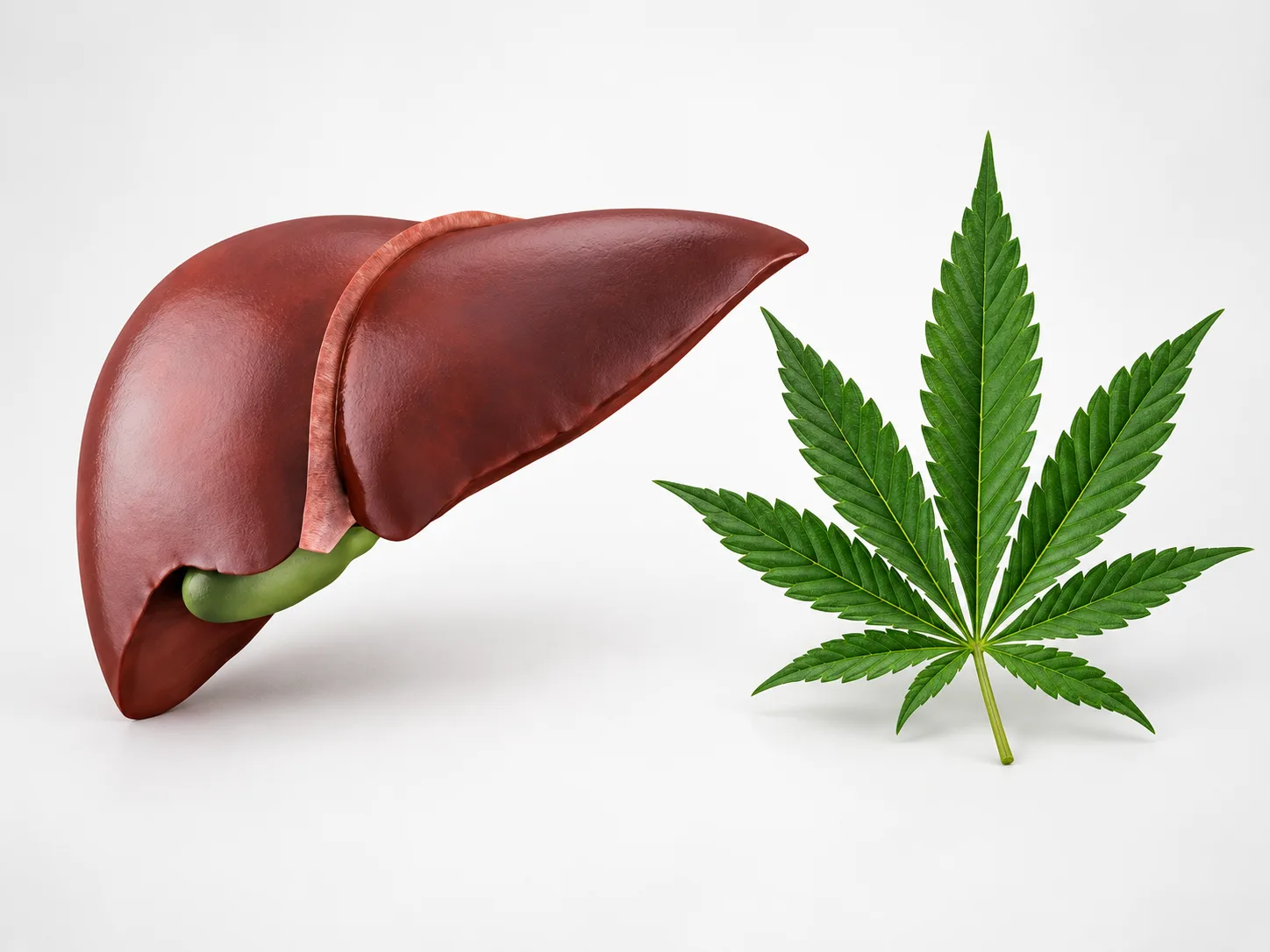
Cannabidiol (CBD) significantly reduced liver scarring, inflammation and markers of liver injury in mice, while researchers identified a potential molecular mechanism explaining how the cannabinoid may help protect against liver fibrosis.
The study, published October 20 in Frontiers in Immunology, was conducted by researchers from Guizhou Medical University and affiliated institutions in China. The team examined CBD’s effects on liver fibrosis, a condition characterized by excessive scar tissue accumulation that can eventually lead to cirrhosis and liver failure.
Researchers induced liver fibrosis in mice through a procedure that blocks bile flow, then administered CBD and examined changes in liver tissue, inflammation and blood markers of liver function.
CBD treatment significantly reduced collagen accumulation, a major component of scar tissue, while lowering levels of proteins associated with fibrosis, including collagen I and alpha-smooth muscle actin. The treated mice also showed improvements in liver injury markers, including ALT, AST and bilirubin, along with reductions in inflammatory molecules such as TNF-alpha and IL-1 beta.
Beyond the improvements in liver tissue, researchers identified a possible explanation for CBD’s protective effects involving macrophages, immune cells that influence inflammation and tissue repair.
The researchers found that CBD suppressed the activity of certain M2-like macrophages that can promote excessive scar tissue formation during chronic liver injury. Further laboratory experiments indicated that CBD may accomplish this by influencing a protein called TRPV4 and suppressing the associated RhoA/ROCK signaling pathway.
This process appeared to reduce the activation of hepatic stellate cells, which are primarily responsible for producing the excess collagen that causes liver fibrosis.
The team also examined human liver tissue samples, finding increased activity in the same signaling pathway in fibrotic tissue. However, the treatment experiments were conducted in mice and laboratory-grown cells, not human patients.
In additional experiments, combining CBD with a drug that inhibits TRPV4 produced greater reductions in liver fibrosis and injury markers than either treatment alone.
The researchers concluded that CBD’s ability to influence immune cell behavior and interfere with signaling involved in scar tissue formation could make it a candidate for further investigation as an antifibrotic treatment. The study did not establish whether CBD would produce similar benefits in people with liver disease.