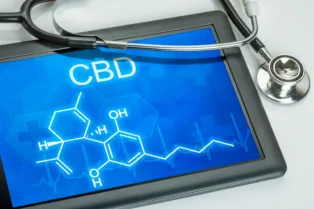
A new scientific review concludes that cannabidiol (CBD) can help athletes recover from strenuous exercise by reducing muscle soreness and certain markers of muscle damage, although researchers found no evidence that it directly improves athletic performance.
The review, published in the September 2026 issue of the International Medical Journal, examined research published between 2021 and 2026 on CBD supplementation, exercise performance and recovery. Researchers searched PubMed and Scopus, focusing on randomized controlled trials, pilot studies, systematic reviews and mechanistic analyses involving exercise-related outcomes.
Researchers found the strongest evidence for CBD as a recovery aid rather than a performance enhancer.
Several studies involving oral or sublingual CBD reported reductions in creatine kinase and myoglobin, biomarkers associated with muscle damage, as well as improvements in delayed-onset muscle soreness during the 48 to 72 hours following strenuous exercise. One study using a 60-milligram dose of CBD after intensive resistance training found lower creatine kinase and myoglobin concentrations after 72 hours, along with greater recovery of maximal squat strength.
However, results varied considerably depending on dose and delivery method. Higher-dose supplementation did not consistently reduce inflammation or muscle damage, and some trials found no improvement in soreness or strength.
The review found particularly little support for topical CBD products. Studies testing creams and ointments, including preparations containing as much as 1,000 milligrams of CBD, found no significant improvement in soreness, pain thresholds or strength recovery compared with placebo.
When it came to athletic performance itself, researchers found no meaningful benefit. CBD did not improve running time trials, cycling power, running economy or time to exhaustion. Some studies found changes in physiological measures, including reduced systolic blood pressure and increased oxygen uptake, but those changes did not translate into better athletic performance.
Researchers also examined CBD’s potential effects on sleep, anxiety and the subjective experience of exercise. Controlled studies found that acute CBD use did not significantly reduce pre-exercise anxiety or perceived exertion, although the review identified sleep as a potentially important area of indirect benefit. Existing research suggests CBD may improve sleep architecture, which could help athletes feel better prepared for subsequent training sessions.
The authors ultimately concluded that CBD has “potential in recovery processes,” particularly for delayed-onset muscle soreness and muscle-damage markers, while finding no statistically significant improvement in endurance performance, maximal power or running economy. They said oral formulations with greater bioavailability and sublingual oils appear more promising than topical products.
Researchers cautioned that much of the existing evidence comes from relatively small studies and that CBD metabolism varies significantly between individuals. They also noted that athletes face a potential anti-doping risk because commercially available CBD products can contain THC or other prohibited cannabinoids despite CBD itself being permitted by the World Anti-Doping Agency.