A liposomal formulation combining cannabidiol (CBD) with the anti-inflammatory drug celecoxib may help slow the progression of high-grade glioma, according to a new study published in the International Journal of Molecular Sciences.
Researchers from Poznan University of Medical Sciences in Poland examined formulations containing CBD, celecoxib or a combination of the two. The treatments were packaged inside liposomes, microscopic lipid-based carriers designed to improve the delivery of substances that dissolve poorly in water.
“Cannabidiol (CBD) and celecoxib (CELE) are hydrophobic pharmacological agents whose formulation in lipid carriers may support their combined biological evaluation,” the researchers said.
For the proof-of-concept study, the team first tested the formulations on U-87 MG high-grade glioma cells. They then evaluated the treatments in mice implanted with human glioma tumors beneath the skin.
The researchers examined whether the formulations affected oxidative stress and inflammatory signaling, two processes that can influence tumor growth and resistance to treatment.
According to the study, liposomes containing both CBD and celecoxib altered cellular signaling associated with inflammation and the response to oxidative stress. The combination affected the NF-κB pathway, which is involved in inflammation and cancer progression, while also influencing antioxidant-related signaling.
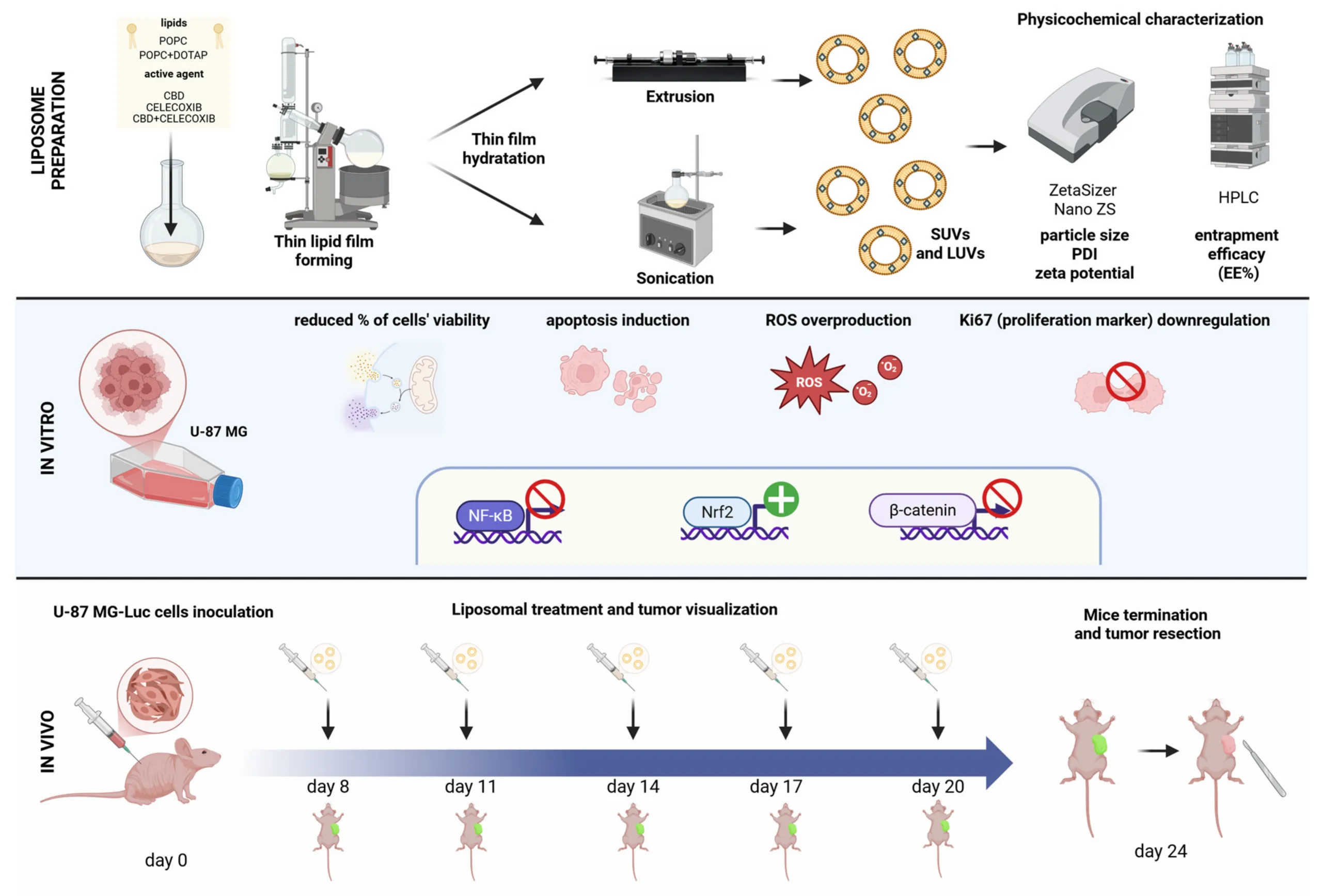
In the animal portion of the study, the combined CBD and celecoxib formulation showed a trend toward reduced tumor progression compared with untreated animals. However, researchers emphasize that the results were preliminary.
The researchers said liposomal delivery may be particularly useful because CBD and celecoxib are poorly soluble in water, potentially limiting their absorption and distribution when administered through conventional methods.
The study builds on earlier laboratory research indicating that CBD and celecoxib may affect glioma cells through complementary mechanisms, including the regulation of inflammatory pathways and oxidative stress.
“Overall, cationic liposomes co-loaded with CBD + CELE represent a promising platform for further investigation in high-grade glioma,” the researchers concluded.
Sponsors: