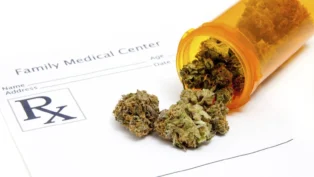
The Drug Enforcement Administration (DEA) has granted federal registrations to more than 900 medical marijuana dispensaries across seven states, marking the first major round of approvals under President Donald Trump’s partial marijuana rescheduling order.
According to an announcement issued today by the Department of Justice, the registrations cover qualifying dispensaries in Alabama, Florida, Mississippi, South Dakota, Texas, Virginia and West Virginia. The approvals allow these businesses to operate under a federal registration framework established when qualifying state-licensed medical marijuana products were moved from Schedule I to Schedule III of the Controlled Substances Act in April.
The department confirmed that each dispensary receiving registration successfully completed a DEA investigation and satisfied applicable federal requirements. These include security measures, inventory controls, recordkeeping standards and other safeguards governing controlled substances.
The initial approvals involve dispensaries that submitted applications during the 60-day registration window established by the April 28 federal rule. Businesses applying during that period received expedited consideration, with DEA directed to make every effort to process those applications within six months.
Attorney General Todd Blanche said the registrations will help expand access to medical marijuana for patients, including those using it to treat chronic pain, while maintaining federal oversight of the industry. He also emphasized that federal authorities will continue enforcing laws against illegal marijuana trafficking.
“The American people deserve access to the best medical treatments in the world,” said Blanche. “The regulated distribution of medical marijuana by the applicants that have been granted registration by the Drug Enforcement Administration will help ensure broader access to chronic pain treatment and the safety of the American people. The Department of Justice will continue prosecuting illegal marijuana trafficking and related criminal activity in accordance with federal law.”
The announcement represents a significant development for state-licensed medical marijuana businesses, which previously operated without the type of federal registration now available under the rescheduling order.
However, the Justice Department emphasized that holding a state medical marijuana license does not automatically qualify a business for federal registration. Applicants must independently satisfy DEA requirements, and their federal authorization remains subject to ongoing compliance.
DEA said it will continue approving qualifying dispensaries through additional phases while also reviewing applications from medical marijuana manufacturers and distributors. Those businesses face additional requirements involving facility inspections, production controls and federal manufacturing quotas.
The registrations come the same day DEA released a list identifying nearly 7,000 medical marijuana business applications. That separate list includes dispensaries, manufacturers and distributors that applied for federal registration, rather than businesses that have necessarily received approval.
The department did not provide an exact number of newly registered dispensaries or a breakdown of approvals by state.
Under the federal order, qualifying medical marijuana businesses that applied within the initial registration window and are still awaiting approval may continue conducting authorized medical marijuana transactions with other qualifying applicants and newly registered businesses, subject to the order’s requirements.
The new registrations apply exclusively to qualifying medical marijuana activities. Recreational marijuana remains classified as a Schedule I substance under federal law, while DEA continues a separate administrative proceeding examining broader marijuana rescheduling.