Recreational Cannabis Sales Pass $500 Million in Ohio

Recreational marijuana sales in Ohio have officially surpassed half a billion dollars, according to the latest figures released by the state’s Division of Cannabis Control (DCC).

As of May 10, the state recorded over $509 million in adult-use marijuana sales. This milestone comes just nine months after recreational sales began, marking a major moment for Ohio’s expanding cannabis industry. The DCC data also shows that these sales were driven by more than 7 million receipts, with over 76,000 pounds of marijuana flower and more than 8.5 million units of manufactured products sold for adult use.

When combined with Ohio’s longstanding medical marijuana program, total cannabis sales in the state is now $2,665,979,601. Of that total, around $2.15 billion comes from medical marijuana, with nearly 30 million manufactured products sold and more than 317,000 pounds of plant material distributed to registered patients.
Continue reading

NY Cannabis Control Board Approves 52 New Adult-Use Licenses, Bringing Total to 1,726, and Launches New Buy Legal Mapping System

The New York State Cannabis Control Board (CCB) has given approval to 50 new adult-use licenses, bringing the total to 1,726.

The approvals were given at the Board’s monthly meeting yesterday. During the meeting, the Board also relayed pivotal information regarding its emerging Seed-to-Sale (STS) program and the soft launch of a consumer-focused Buy Legal mapping system.

“New York’s Seed-to-Sale tracking system will be a critical part of OCM’s compliance and enforcement work as the agency continues to build the cannabis market. The transparency and accountability the system will provide allows OCM to trace every cannabis product from cultivation to consumer, ensuring that only legally grown and tested products reach the marketplace,” said Felicia A.B. Reid, Acting Executive Director of the Office of Cannabis Management.  “This implementation is a win for consumers, operators, and the future of fair and well-regulated cannabis in New York. STS brings meaningful structure and support to licensed operators. This system is a critical advancement for operators navigating a regulated market and it’s an important tool in our efforts to prevent inversion and maintain integrity across the supply chain. The Office will work with licensees to meet key integration deadlines over the next few months as Seed-to-Sale comes online.”

Continue reading

Minnesota Governor Tim Walz to Sign Major Marijuana Policy Bill Passed by Legislature

Governor Tim Walz has confirmed he will sign Senate File 2370 into law, finalizing a wide-ranging overhaul of Minnesota’s marijuana and hemp regulations.

Governor Tim Walz (photo credit: AP Photo/Matt Rourke).

Senate File 2370 received final passage last week after both the House and Senate adopted a conference committee report and held final votes—80 to 50 in the House and 34 to 33 in the Senate. The measure now awaits a decision by Governor Walz, with a spokesperson saying he plans to sign it into law soon.

The proposed law allows for the creation of cannabis delivery services, establishes protections for attorneys and public employees involved in the cannabis system, and it allows on-site consumption of infused cannabis products under certain conditions.
Continue reading

DEA Approval Given to Red Light Holland and Irvine Labs to Import Psilocybin Truffles for Microdosing Research

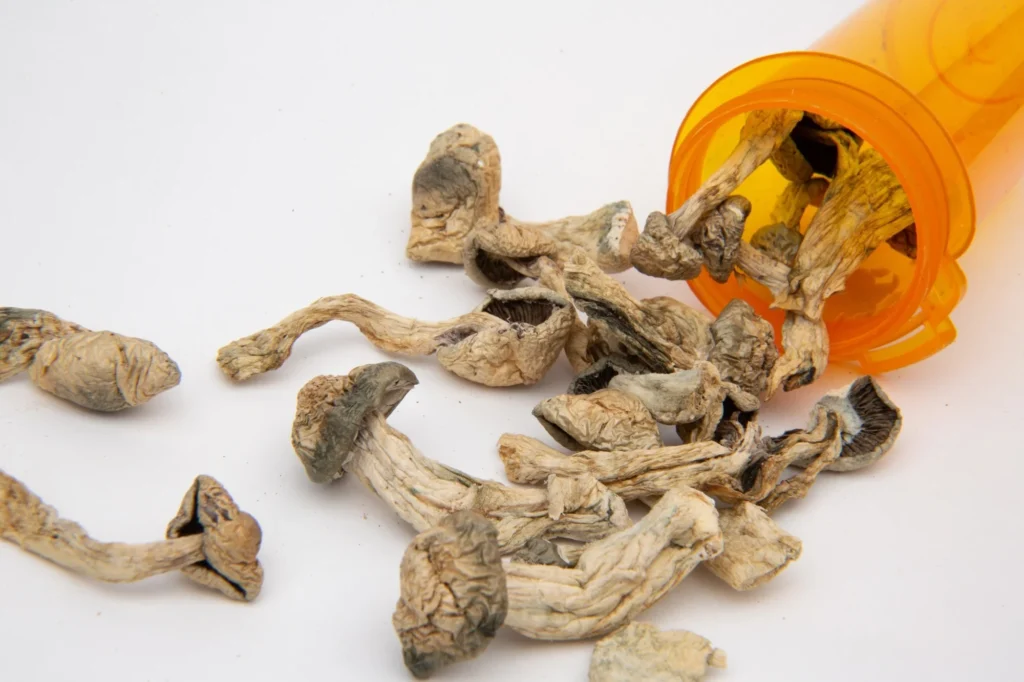
Red Light Holland has announced that its U.S.-based research partner, Irvine Labs, has received a Controlled Substances Import Permit from the DEA, clearing the way for the importation of psilocybin truffles from the Netherlands to California.

The permit, granted after the DEA released its 2025 psilocybin quota in April, allows the companies to move forward with the shipment of 3 kilograms of raw psilocybin material from Red Light Holland’s facility in Horst. Irvine Labs, an FDA-compliant and DEA-registered operation, is licensed for prescription and over-the-counter drug manufacturing and is authorized to handle Schedule I substances including psilocybin, LSD, and DMT.

This milestone marks the latest step in a growing partnership focused on developing standardized microdosing capsules with extended shelf life. Using proprietary preservation techniques, the companies aim to refine dehydration and packaging processes that retain the integrity of natural psilocybin compounds. The ultimate goal is to produce a stable, scalable product that can be used in clinical trials and potential government-funded pilot programs in the United States.
Continue reading

Study: Legal Cannabis Linked to Lower Prescription Drug Costs in Small Group Insurance Plans

A new study published in Health Economics has found that recreational marijuana laws are associated with lower prescription drug expenditures among working-age adults covered by small group insurance plans.

Researchers from Illinois State University, Bowling Green State University, and the University of Texas analyzed data from 2010 to 2019 using prescription drug claims from the NAIC Supplemental Health Care Exhibit. They used a difference-in-differences approach to assess the financial impact of both medical and recreational cannabis laws on insurance markets.

The study found that states which legalized recreational marijuana saw a reduction in annual prescription drug claims by $34 to $42 per enrollee in the small group insurance market. The researchers did not observe similar effects in large group insurance plans but found weak evidence suggesting that these reduced claims may translate to slightly lower premiums in small group plans.
Continue reading

Study: End-of-Day Far-Red Light Boosts THC Levels in Cannabis, Reduces Energy Use

A study published in the journal Scientific Reports has found that adding far-red light at the end of the day can significantly boost THC levels in some cannabis strains while reducing overall energy consumption.

For the study, researchers from Australia compared six lighting treatments across three popular genotypes—Cannatonic, Hindu Kush, and Northern Lights—exploring whether a 10-hour light cycle supplemented with FR could match or exceed the yield and potency of the traditional 12-hour photoperiod. The most notable result was seen in Northern Lights, where a treatment of 10 hours of full-spectrum light followed by two hours of FR in darkness (10L_2D) led to a 70% increase in total THC yield compared to the standard 12-hour schedule. This treatment also cut energy use by 5.5%.

THC levels in Hindu Kush were also elevated with FR exposure, especially when it was applied for two hours during light and two hours in darkness (10L_2_2D). In Cannatonic, a high-CBD strain, results were mixed—FR treatments had varied effects on cannabinoid content and did not significantly improve total CBD yield.
Continue reading

Maryland Governor Signs Bill Easing Background Checks for Marijuana Security Guards

Legislation reducing hiring barriers for security guards in Maryland’s marijuana industry has been signed into law by Governor Wes Moore.

Senate Bill 299, sponsored by Senators Mary Carozza (R) and Brian Feldman (D), removes the requirement for state and national criminal background checks for security guards working for licensed marijuana businesses, provided they are already registered under Maryland’s general security guard laws. The change is intended to streamline employment while avoiding redundant checks that can be problematic due to marijuana’s ongoing federal classification.

Previously, all cannabis agents—including security staff—were required to register with the Maryland Cannabis Administration and undergo background screening, a process that sometimes created delays or disqualified applicants over minor past offenses.
Continue reading

Nebraska Lawmakers Fail to Pass Medical Marijuana Regulations Following Filibuster

Efforts by Nebraska lawmakers to regulate medical marijuana stalled this evening after the Senate failed to overcome a filibuster, effectively killing legislation that would have set up a framework for the voter-approved program.

Despite voters legalizing medical marijuana through two ballot initiatives last November, there is currently no licensed dispensaries and no access for patients. The Nebraska Medical Cannabis Commission, which includes members of the Liquor Control Commission and two gubernatorial appointees, is now tasked with overseeing implementation. Dispensary licensing isn’t expected to begin until at least October.

The primary bill to advance regulation, LB 677, was introduced by Senator Ben Hansen and was seen as the most viable of four marijuana-related proposals introduced this session. After weeks of negotiations in the General Affairs Committee, the panel advanced a compromise amendment, AM1251, outlining possession limits and qualifying conditions.
Continue reading

Connecticut House Passes Bill to Decriminalize Psilocybin

The Connecticut House of Representatives has voted in favor of House Bill 7065, a proposal that would decriminalize the possession of small amounts of psilocybin, commonly found in psychedelic mushrooms.

Under the measure, individuals found with less than half an ounce of psilocybin would no longer face criminal charges. Instead, first-time offenders would be subject to a $150 civil fine, with repeat violations resulting in fines ranging from $200 to $500. Law enforcement would still be required to confiscate and destroy any psilocybin they encounter.

The proposal was given approval by the House with 74 voting in favor, and 65 opposed, with 12 members absent.
Continue reading

Las Vegas Casino Executive Says Embracing Cannabis Could Boost Tourism and Revenue

Seth Schorr, CEO of Fifth Street Gaming, says it’s time for Las Vegas to embrace marijuana lounges and allow hotel deliveries to boost tourism and stay competitive with other destinations.

Schorr made his case during a cannabis and gaming policy panel this week at the University of Nevada, Las Vegas, hosted by the Cannabis Policy Institute and International Gaming Institute.

“We need every tool in the toolbox,” Schorr said. “Visitation is down. Maybe 10 years ago, you had to be conservative, but today it’s got to be on the table.”
Continue reading