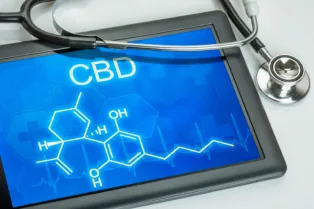
A new study found that cannabidiol (CBD) significantly inhibited the growth and biofilm formation of Streptococcus oralis, a bacterium involved in the early development of dental plaque, while maintaining the viability of human gum cells at the concentrations tested.
The study, published in the International Journal of Dentistry, was conducted by researchers from Laval University in Canada and São Paulo State University in Brazil. Researchers said the findings provide preliminary evidence that CBD could warrant further investigation as an antimicrobial compound for oral health applications.
S. oralis is considered a pioneer colonizer of the mouth, helping establish early oral biofilms and facilitating the attachment of other microorganisms. These biofilms contribute to dental plaque and can be associated with conditions including tooth decay and periodontal disease. Current antimicrobial treatments such as chlorhexidine can help control oral bacteria but may cause tooth staining and disrupt the oral microbiome with prolonged use.
For the study, researchers exposed S. oralis to varying concentrations of CBD with a purity of at least 98%. They monitored bacterial growth for 24 hours, determined the minimum concentrations needed to inhibit and kill the bacteria, and examined biofilm formation following three days of CBD exposure. Human gingival epithelial cells were also exposed to CBD to assess cell adhesion, morphology and viability.
CBD inhibited bacterial growth in a concentration-dependent manner. The minimum inhibitory concentration, or MIC, was 6.25 micrograms per milliliter, while the minimum bactericidal concentration, or MBC, was 25 micrograms per milliliter. Even the lowest concentration tested, 3.12 micrograms per milliliter, produced significant growth inhibition, although the effect was not sustained throughout the full 24-hour period.
Researchers also found that CBD significantly reduced S. oralis biofilm formation. Reductions were more pronounced at concentrations of 6.25 and 12.5 micrograms per milliliter, and histological analysis showed progressively greater disruption of the biofilm’s structure. The researchers reported that the reduction in biofilm formation was not statistically different from that observed with the antibiotic treatment used as a positive control.
Importantly, CBD concentrations of 3.12, 6.25 and 12.5 micrograms per milliliter did not significantly reduce the viability or proliferation of human gingival epithelial cells after 24 hours. Cells exposed to the two lower concentrations also showed morphology and adhesion similar to controls. At 12.5 micrograms per milliliter, researchers observed a slight change in cell shape, but cell adhesion appeared to remain intact.
The findings remain preclinical. The experiments were conducted entirely in vitro, and the bactericidal concentration of 25 micrograms per milliliter was higher than the concentrations evaluated in human gingival cells. Researchers said additional studies are needed to determine CBD’s safety, optimal concentration, delivery method and clinical relevance before it could be considered for oral health applications.