A new study published this week in the journal Pharmaceuticals found that cannabidiol (CBD) significantly reduced inflammation, oxidative stress, bacterial burden and markers of organ damage in rats with experimentally induced sepsis, with the strongest overall improvements observed at the highest dose tested.
The study was conducted by researchers from several institutions in Türkiye. It involved 48 male Wistar rats divided into six groups, including healthy controls, untreated septic animals and three groups receiving CBD at doses of 2.5, 5 or 25 milligrams per kilogram of body weight.
Sepsis was induced using a procedure known as cecal ligation and puncture, which produces a severe infection and systemic inflammatory response. Researchers administered CBD after the procedure and examined blood, tissue and organ samples 10 hours later.
At the highest dose, CBD reduced three major inflammatory markers compared with untreated septic rats. Tumor necrosis factor-alpha decreased by 78.8%, interleukin-1 beta fell by 80.1%, and interleukin-6 declined by 80.2%. Levels of interleukin-10, an anti-inflammatory cytokine, increased toward those observed in healthy animals.
The researchers also documented substantial improvements in indicators of liver and kidney function. At the 25 mg/kg dose, the liver enzyme ALT declined from 136.4 to 46.2 units per liter, while creatinine, a marker of kidney function, dropped from 1.68 to 0.54 milligrams per deciliter.
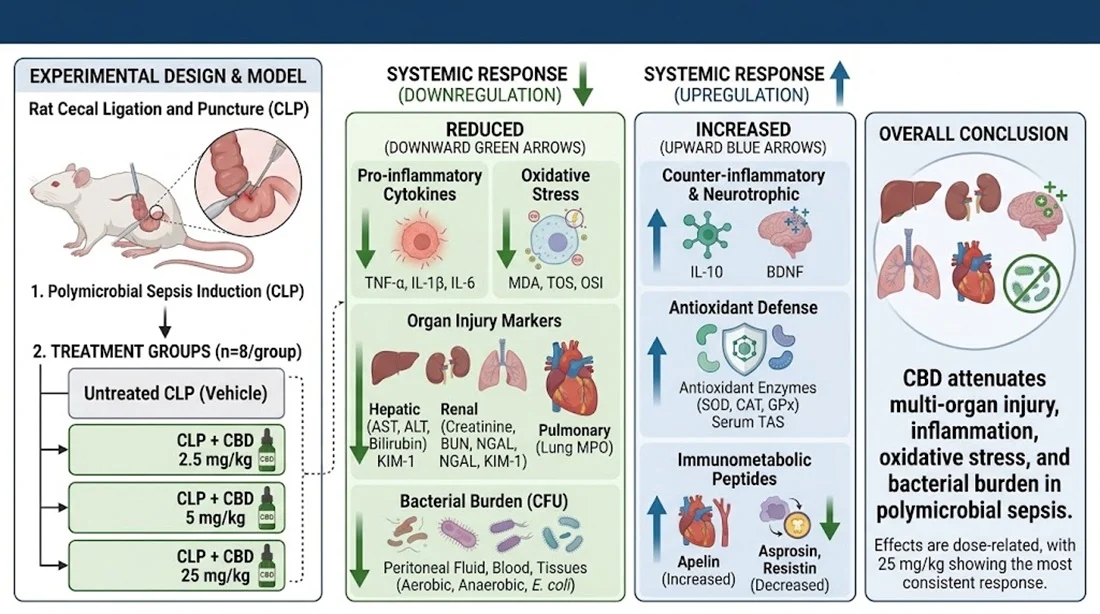
Additional measurements indicated reduced lung inflammation and improvements in biomarkers associated with neurological injury. Tissue examinations generally showed less damage to the liver, kidneys, lungs, heart and spleen among CBD-treated animals, although the magnitude of improvement varied between organs.
One notable finding involved bacterial dissemination. Researchers measured bacterial concentrations in abdominal fluid, blood and several organs, finding lower recoverable bacterial counts in every sampled location among animals treated with CBD. The reductions generally increased with dosage, with the highest-dose group showing the largest differences.
CBD treatment was associated with improvements in oxidative stress measurements as well. At the highest dose, malondialdehyde, an indicator of lipid oxidation, decreased by 67.3%, while total oxidant status fell by 64.6% compared with untreated septic animals. Several antioxidant-related measurements also approached levels observed in healthy rats.
The researchers concluded that CBD produced coordinated improvements across inflammatory, biochemical and tissue-level measurements, suggesting potential protective effects against the systemic damage associated with sepsis.
The study’s team notes that although the results are “incredibly promising”, the findings remain preliminary. The experiment involved only male rats, examined outcomes over a single 10-hour period and did not assess survival. The animals also did not receive antibiotics or the supportive fluid treatment typically used in clinical sepsis care. The researchers said additional studies incorporating standard sepsis treatments, longer observation periods and survival measurements are needed to determine whether the improvements observed with CBD translate into meaningful therapeutic benefits.