Researchers have developed a method for turning leftover material from hemp seed oil production into stronger, biodegradable plastic, with laboratory testing showing substantial improvements in strength, moisture resistance and heat tolerance.
The study, published in the peer-reviewed journal Industrial Crops and Products, examined whether proteins recovered from industrial hemp seed oil cake could be chemically modified to produce more durable bioplastics.
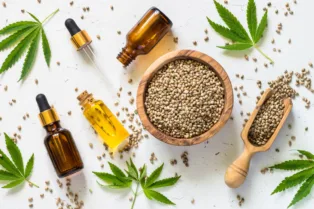
Hemp seed oil cake is the material remaining after oil is extracted from hemp seeds. Although it contains substantial amounts of protein, much of its potential value remains underutilized.
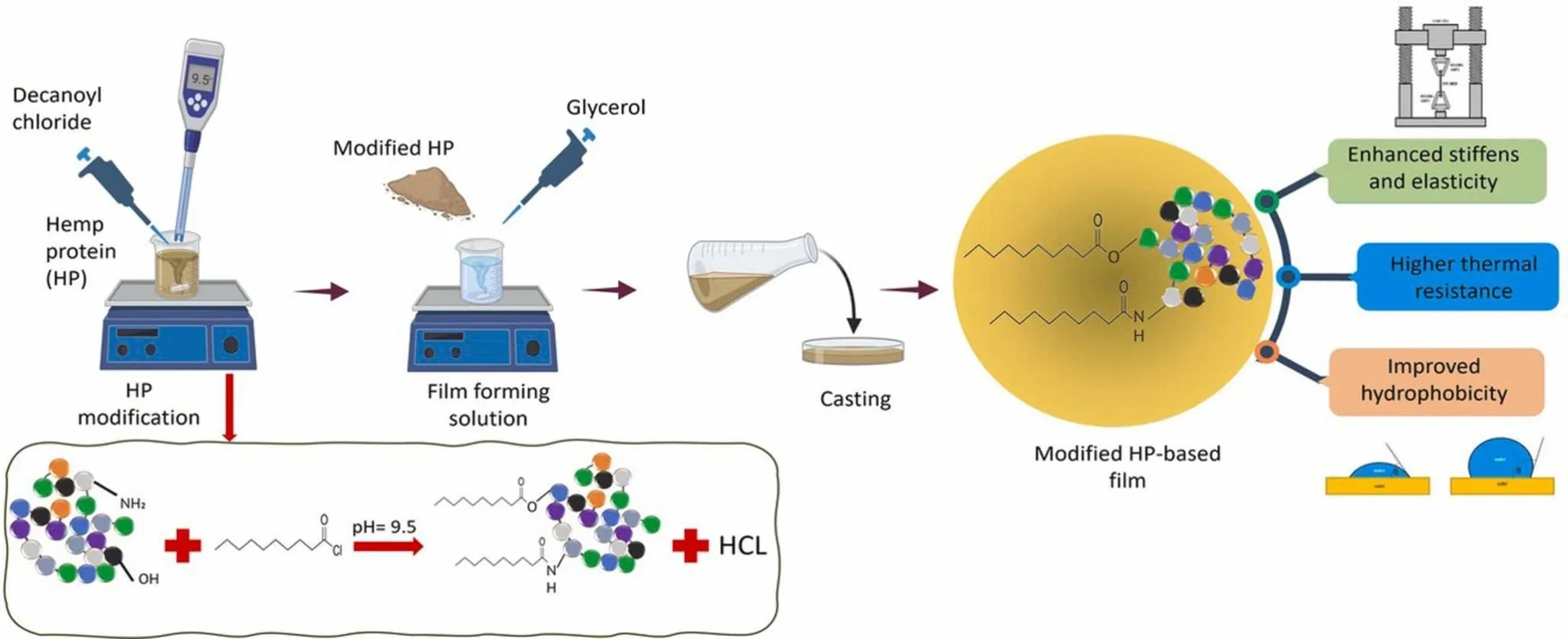
Researchers led by Seyedeh Fatemeh Mirpoor extracted proteins from the leftover material and treated them with varying concentrations of decanoyl chloride, a fatty acid derivative, to change their molecular structure.
The modified proteins were then used to create thin plastic-like films, which were tested for mechanical strength, moisture resistance, thermal stability and biodegradability.
One of the most significant improvements involved tensile strength, which measures how much pulling force a material can withstand before breaking. The strongest modified films achieved a tensile strength of 3.9 megapascals, compared with 2.1 megapascals for films made from unmodified hemp protein.
That represents an increase of approximately 86%.
The researchers also documented improvements in stiffness, with Young’s modulus increasing from 18.1 to 37.6 megapascals, more than doubling the value recorded for untreated films.
Moisture-barrier performance improved as well. The best-performing formulation reduced water vapor permeability by approximately 38%, indicating that the modified material was more effective at limiting moisture transmission.
Thermal testing showed that chemical modification increased the temperature associated with protein denaturation from 105°C to 118°C, suggesting improved resistance to heat-related structural changes.
Researchers also examined whether the materials would break down under environmental conditions. During a 40-day soil burial experiment, more than 60% of both modified and unmodified hemp protein films disintegrated.
The findings suggest that agricultural byproducts from hemp processing could provide raw materials for biodegradable packaging, household products and certain agricultural applications.
The researchers said further development could help expand the practical uses of hemp-derived bioplastics. However, the materials were produced and evaluated under laboratory conditions, and their performance in commercial manufacturing and real-world applications remains to be established.



Related posts:
Study Finds Brain’s Natural Cannabinoid System Declines With Age, While Low-Dose THC May Help Counte...

Three-Year Study Finds Hemp Plants Can Be Shortened 14% Without Significantly Reducing Seed Yields